

It’s impossible to be in the fight for women’s liberation without knowing the name Malala Yousafzai. At only 28, her influence extends far beyond global feminism. As the youngest Nobel Prize laureate in history, she continues to show up for women and girls on the world’s largest stages. Her harrowing story, and the movement that has grown from it, has reshaped how we understand violence against women and girls and how we fight for equity in education on a global scale.
In her new book, Finding My Way, we see a different side of Malala. A deeper, more emotional Malala. She speaks candidly about the depths of her mental health journey, shares both fond and violent memories from her childhood, and allows us to follow her steps as a human being, a young person, and a student.
“Every time I gave a speech and mentioned the millions of girls around the world who weren’t in school, the same faces ran through my mind: My cousin who came home one day to learn she would never go back to the classroom because her father had arranged her marriage. A friend who had two babies by the time she was fifteen. The child laborers I saw everywhere in Mingora—girls who cleaned houses, sold oranges by the side of the road, sifted through garbage dumps for scrap metal.”
Finding My Way is a tender declaration. We see Malala’s young heart grow and break as she feels romantic love for the first time, stresses about school work, and balances the pressures of being a public figure with having a “normal” life as a young woman.
“I didn’t believe that anyone would want me. No matter how much confidence I projected onstage and in speeches, I felt too ugly to love. ”
What was most precious about this work is Malala’s love for her female friendships. She gushes about her early girlhood bonds back at home in Pakistan and takes us through her search for closeness and care with other young women as she begins adulthood at Oxford.
After a few minutes of eavesdropping on a group of women discussing South Asian soap operas, I took a step closer and said, “Mind if I join you?” We spent almost an hour cracking up over the ridiculous plotlines—vengeful daughters-in-law, reincarnated husbands who come back as six-year-olds, random nuclear bombs in corner stores.
At times, Finding My Way feels like peering into Malala’s diary. It’s moments with her friends at a McDonald’s at 1 a.m., her first time trying a joint, and keeping little secrets from her parents. The book is also reflective and critical, chronicling her personal disappointments with world leaders, financial obligations, insecurities about family expectations, and her connection to her Pakistani roots. It’s a real, heavy, and emotional coming-of-age story about love, acceptance, cultural understanding, and survival.
In Finding My Way, you speak candidly about the challenges of balancing activism, leadership, and supporting your family and community in Pakistan, all while managing the demands of being a student at Oxford University. Since graduating, how have you been able to prioritize your own wellbeing and mental health more fully on top of the demands of your busy career?
For me, finding balance takes a lot of intentional effort. I work out, eat well, go to therapy—and sometimes even all that is not enough and I just have to take the day off, stop working, flop on the couch and watch TV, call a friend, or go for a walk.
When I was younger, I had this idea that every moment I wasn’t working, I was letting people down or that, because I’m an education activist, I was somehow setting back progress if I wanted to go to the movies with my friends. What I’ve realized now is that I bring more energy and focus to my work when I slow down and take care of myself.
Mental health comes up often in your book. Not only your own, but also that of young girls and women in Pakistan who grow up witnessing extreme misogyny and violence from an early age. How does destigmatizing mental health care intersect with your work as an education advocate?
In the culture I grew up in, no one talks about mental health. There’s a lot of stigma and misinformation around therapy or seeking support for things that I struggle with, like anxiety and PTSD.
When I built a school for girls in a rural area of Pakistan, I wanted to make sure they had a counselor on staff there. It was highly unusual for a school in that part of the world, but, by that point in my life, I had realized how important it is for young people to have mental health support.
When children go to school, they don’t just learn skills for future work—they build confidence and a sense of self-worth. But when girls grow up surrounded by discrimination, fear, or violence, the damage is not only academic, it's emotional too. Quality education should teach children the skills they need, while also ensuring students feel safe, valued and supported.
“My scarves reminded me of home and helped me connect to a world I had lost. No matter what the misogynists or Islamophobes said, I wanted girls in Pakistan to know that I had not forgotten them.”
You write about struggling with low self-esteem and feeling “too ugly to love” while adjusting to drastic changes in your physical appearance. What advice would you give to young people who feel dejected or unlovable because of how they look?
There were times in my life when I looked in the mirror and did not recognize myself—my face had changed and it was painful to accept sometimes. It made me feel like my options in life were limited, that I needed to dedicate myself to my mission and work because I would never find love.
But that turned out not to be true. I did fall in love and now I have a wonderful relationship with someone who thinks I’m beautiful. To anyone else who feels that way, I would say don’t talk down to yourself or decide that you know what life has in store for you. It’s such a cliche, but you really do have to love yourself before you can accept love from someone else. It took me a long time to be comfortable looking in the mirror… but once I was, I could see what my partner sees. And I love that.
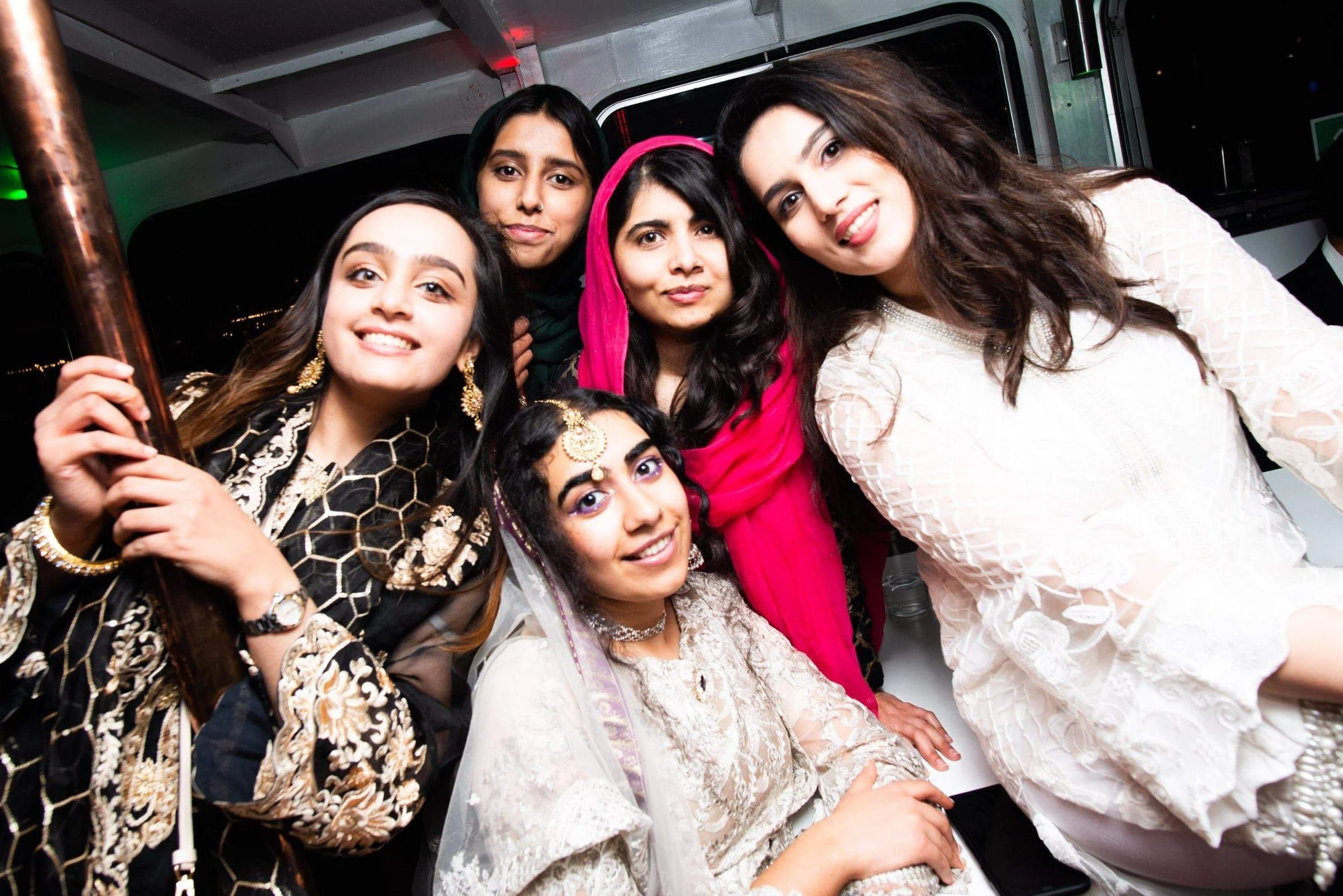
Your close connections with girlhood friends, whether in Pakistan or during your time at Oxford, shine through as deeply important in the book. What have these sisterhood connections meant for you as a source of survival, healing, and becoming the person you are today?
“Sisterhood” is definitely the right word because I feel like that’s what I found with my college friends. I was so lonely in high school and felt like a ghost walking around the halls, like no one could even see me. But by the end of college, I felt like I belonged—not just included but loved. And that really changed my life in so many ways. Within my group of female friends, I feel like I can be fully myself. They don’t care what I wear or if I laugh at my own jokes, which I often do!
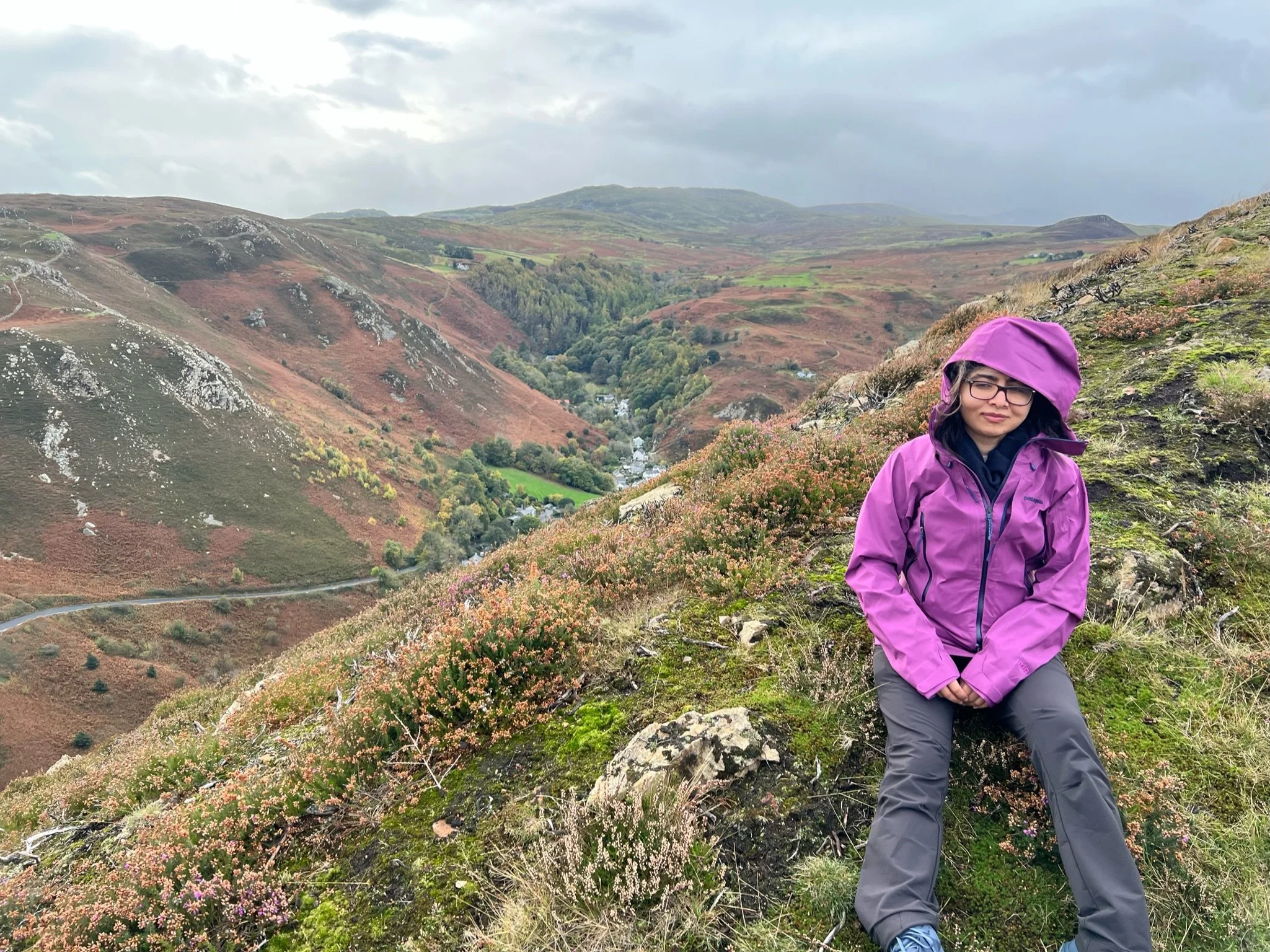
You write tenderly and nostalgically about the beauty of home in Mingora. Your love for the mountains, the animals, and its natural charm. How have you managed to hold on to that love and tenderness, even while facing mistrust and hostility from people in your community and across Pakistan because of your work and activism?
The place where I grew up is so beautiful, and it will always be home for me. The interesting thing is that, whenever I’m in Pakistan, people are nothing but warm and loving to me. I think I can only count two times when people have said unkind things to my face. The internet makes it easy to lash out—and it can also make this sort of hostility feel bigger than it is. I know that a lot of it is bots and another portion is people deliberately spreading misinformation because they want to take away my voice. So I try my best to keep the focus on the people I meet in person and remember their smiles, joy, and hospitality.
In Finding My Way you describe the highs and lows of academic life at Oxford. Since graduation, how has what you learned at Oxford shaped your approach to advocacy?
I think the greatest thing I learned at Oxford was the process of seeking knowledge—where to find it, how to read data sets, how to analyze text. I wouldn’t say that I came away from college
with an ideology or strategy about changing systems. But being able to keep learning and seeking answers is vital to my life and work. I’m grateful to have learned that at Oxford.
In the book, you write about political violence in Afghanistan:“For the first time, I realized the world was not committed to fighting for the rights of women and girls. The worst moment of my life had been not a turning point, but a pause …” When you face what feels like a massive setback, or a dead end, where do you find the strength to keep going and continue the fight for equity?
Afghan women and girls had their rights stripped away completely—and the world let it happen. They cannot leave their houses freely, listen to music, get medical care, or even speak in public. Sometimes I just cry, sickened by all the horrible things happening in the world, wondering how much more suffering we need to see before things change. In those moments, I find strength in the stories of others. Millions of girls out there believe in a better world and are fighting for that future. If they haven’t given up, I can’t either.
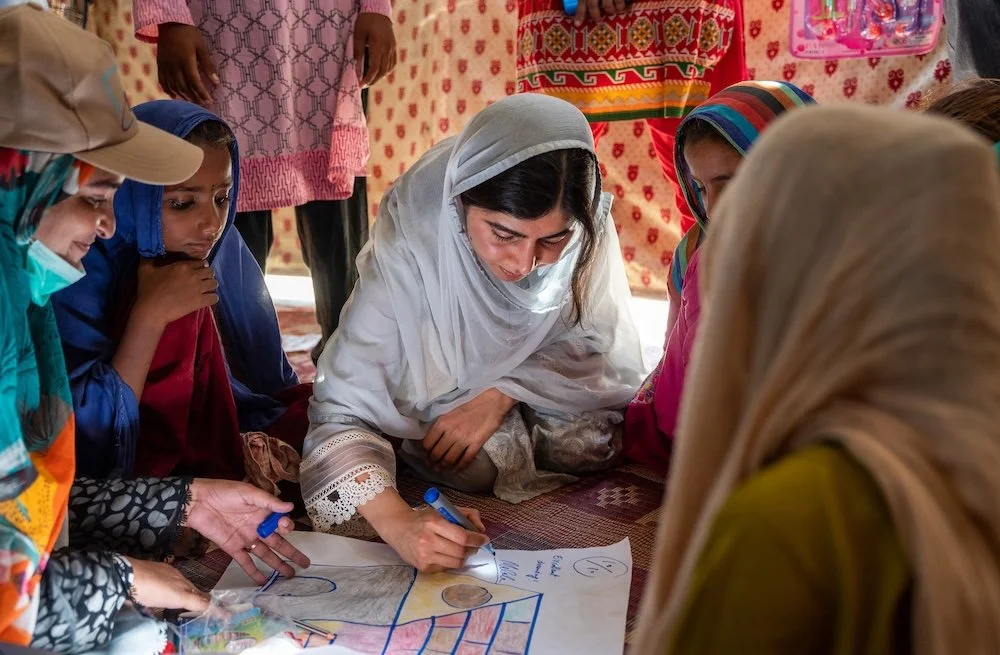
Your work and passion have always centered on ensuring that girls have access to education. In Finding My Way, you return to the school you opened in Shangla and witness the world of possibilities that education can create.
It was amazing to see these girls laughing with friends, discussing what they wanted to study next, planning careers—all the things that were once denied to my classmates and I when we were their age. I’m proud of my university degree, the Nobel Prize, the fact that Malala Fund has helped millions of girls go to school. But knowing that I built the first high school for girls in Shangla, that these young women were the first ever to graduate in their village … nothing matters to me as much as that.


