

1 in 4 Americans don’t fill the prescriptions they need to stay healthy because of cost. At the same time, up to $11 billion in unopened, unexpired medicine goes to waste each year.
Fresh off of her conversation at TEDNext this November, we spoke to Kiah Williams, co-founder of SIRUM, about founding a company that helps hundreds of thousands of people get access to life-saving medicines.
Incubated at Stanford University, SIRUM tackles medicine affordability, reaching 800,000 people nationwide. And that number is growing. The nonprofit helps health facilities and pharmacies donate unused medicine through a network of community partners who ensure it reaches patients in need. They’re also grantees of The Audacious Project, a funding initiative housed at TED to help entrepreneurs take bigger leaps in changing the world for the better.
What began as a student project at Stanford has become a national movement built on innovation, empathy, and purpose. We asked the entrepreneur about her upbringing, the path to building SIRUM, and what challenges she faces when it comes to innovating in the current pharmaceutical space.
“Volunteering in clinics, I saw firsthand how many people couldn’t afford the medicine they needed.”
Attia Taylor: Can you share a little about your life and upbringing?
Kiah Williams: I come from very modest beginnings. Growing up, some years were okay and some weren’t. Stability was something I craved. I was good at math and science and chatty, so everyone told me I should be a doctor. I thought, “Perfect! I’ll help people, have stability, and make my family proud.”
When I got to college, I realized that helping people could also be a form of research and scholarship. You could actually study social impact work. I still planned to go to medical school, I even got in and deferred 3 times, but my work experiences started shifting my perspective.
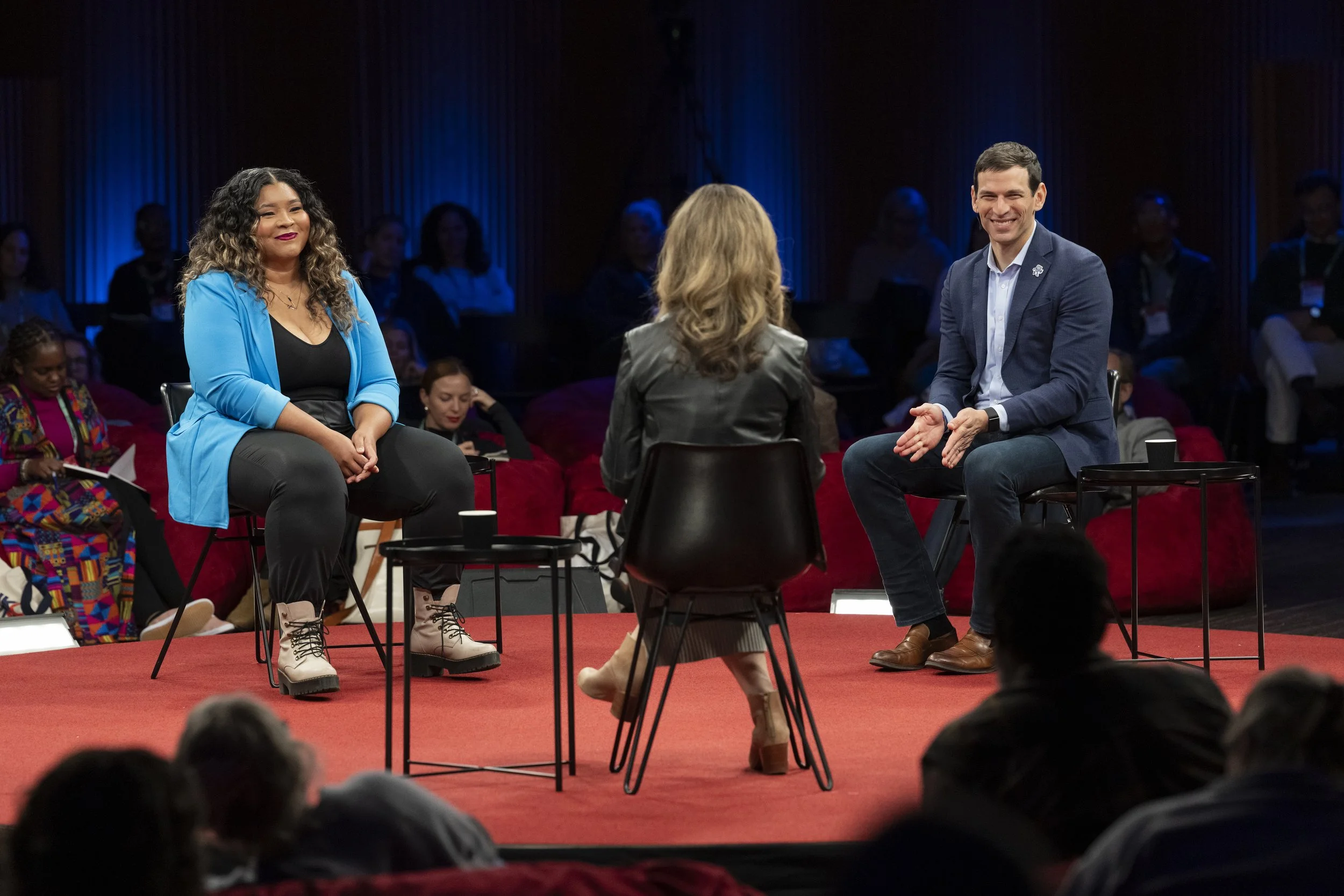
Kiah Williams in conversation at TEDNext in Atlanta in November 2025.
How did your family react when you chose this path instead of medicine?
At first, they thought it was a detour. A fun side quest before I went back to medical school. Because I’d already been accepted, I think they assumed I’d circle back. For a long time, they didn’t quite understand what I was doing.
Now, they’re very proud and supportive. They see the impact, the growth, and the stability it’s created. Not just for me but for our team and the people we serve.
Where are you currently based?
I recently moved back to the Bay Area. Philly raised me, shaped my independence and perspective, but the Bay Area’s ecosystem of innovation and risk-taking made it possible to start SIRUM.
What has been your drive for building SIRUM?
Volunteering in clinics, I saw firsthand how many people couldn’t afford the medicine they needed. My co-founder, Adam [Kircher], had the idea to use technology to connect surplus meds with those in need. SIRUM started as a student group at Stanford, and we discovered that there was medicine being destroyed in the same communities where people were going without. We didn’t need to make new drugs, we just needed to use what already existed more efficiently.
How do you all decide where the needs are for your patients?
Ideally, the needs of our patients and the needs of our organization are one and the same. That’s one of the advantages of being in a social impact organization. You can always ask, “What’s good for the people we’re serving?” and let that guide you.
We’re a nonprofit, so we rely on a mix of research and pragmatism. We look at data, community statistics, public health reports, and try to triangulate where the biggest needs are. But we also consider where we have strong community partnerships.
You can’t just look at the data; you need to see where the “water flows easily.” Where do we have partners on the ground? Where can we plug into existing infrastructure instead of reinventing the wheel?
For instance, we recently launched work in Maryland. The governor’s office and the state’s Prescription Drug Affordability Board were already focused on lowering drug costs. That kind of alignment makes it easier for us to have real impact.
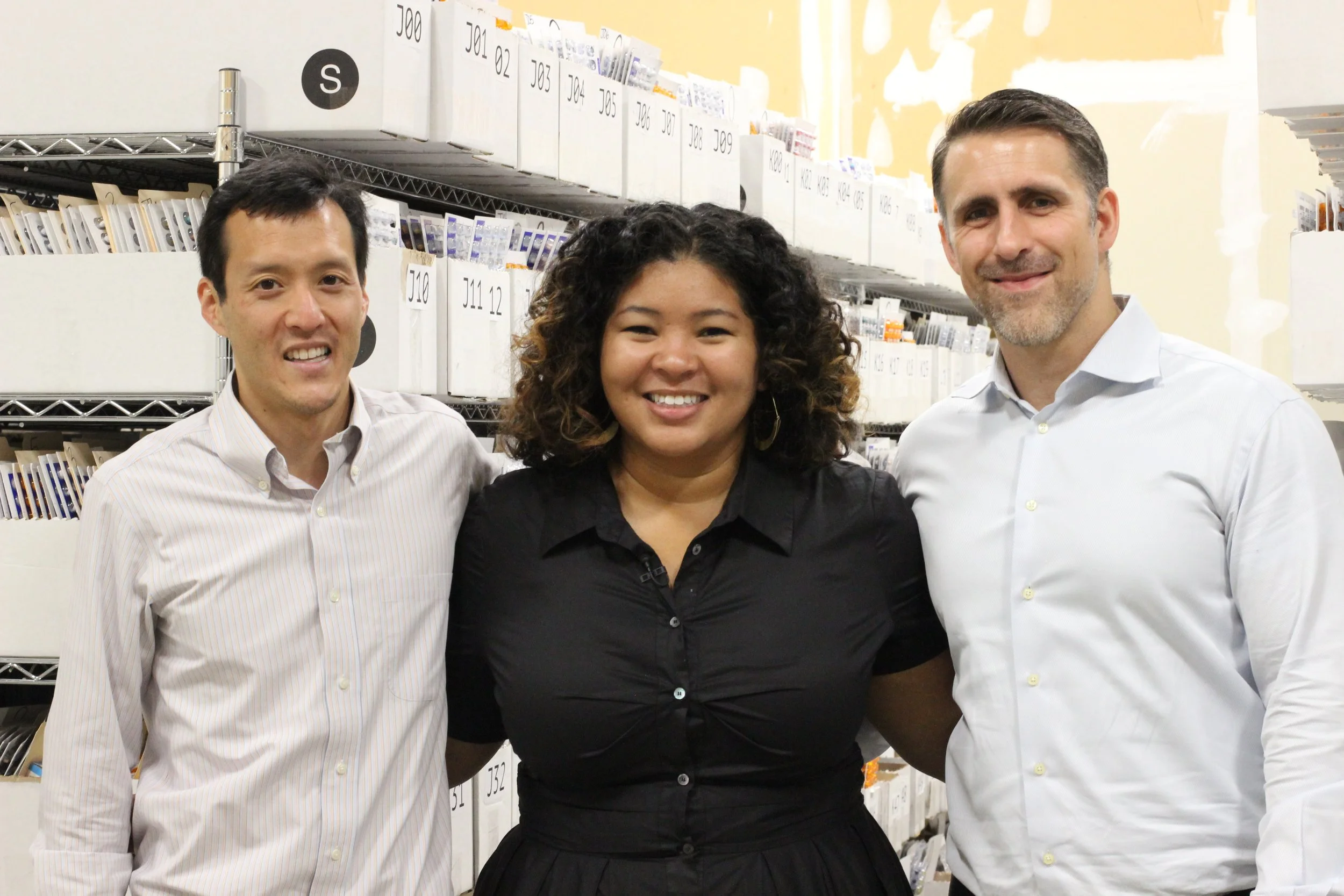
Kiah Williams alongside her other SIRUM co-founders George Wang (left) and Adam Kircher (right).
What’s it like partnering with pharmaceutical companies, given their reputation?
I think most people in healthcare truly want to help others. The challenge is in how the system is set up—the bureaucracy, the red tape, the automatic “no’s.”
We work with pharmaceutical companies, manufacturers, and wholesalers to donate medications, alongside hospitals, pharmacies, and nursing homes. Often, it’s not resistance, it’s just that no one’s taken the time to figure out how to make “yes” possible. Our role is to show that there’s a safe, legal, and effective way to do this.
How can people who can’t afford their medicine right now get help?
There are resources like NeedyMeds and GoodRx for discounts. But honestly, reach out to us at SIRUM. We respond to every call and email and will connect you to the home delivery pharmacy we power, or community partners like free clinics or charitable pharmacies if we’re not already working in your area. We want everyone to have access to the medication they need.
You’re a co-founder, a new mom, and doing speaking engagements across the world. How do you take care of yourself with such a demanding job?
Honestly, I’m still learning. I come from a grind culture. You keep climbing the mountain just because it’s there. My husband likes to remind me to ask myself, “Is this a mountain I need to climb?”
I follow a system called ‘Getting Things Done’. There are 168 hours in a week, and I spend 1 hour planning the other 167. I calendar everything: meetings, workouts, meals. I love “fitness cults” like SoulCycle and Barry’s Bootcamp, so if I’ve scheduled a few of those in my Monday planning hour, I know I’ll have a good week.
I think otherwise I end up with a high level of anxiety: “Am I getting everything done? Is everything written down?” I have to put it in like a work block to say, this is what I'm doing for this 20 minutes.
Has that changed since you became a mom?
Since becoming a mom, I’ve built in flex-time. Daycare drop-off might be at 8:30, but that doesn’t mean I can take a meeting at 8:31. I try to plan with some buffer and a lot more grace. I alternate with my husband and sometimes we go together. We're still figuring out the mechanics.
A fun one for you: What’s your favorite Philly food spot?
Oh, that’s tough! I love Sabrina’s Café. The original in South Philly and the big house one near Penn and Drexel. Their challah French toast is my go-to.
For cheesesteaks, I’ll go to Jim’s on South Street or Abner’s in University City. And back in my old neighborhood near 63rd and Lansdowne, I loved Vincent’s Pizza. My order: cheesesteak with salt, pepper, ketchup, fried onions, and cheese fries. That’s the Philly in me.


