Literary and design heavyweights Roxane Gay and Debbie Millman have joined forces to purchase, refresh, and redesign The Rumpus, the longtime literary hub known for championing fresh voices in fiction and nonfiction.
Founded in 2009, The Rumpus is an independent online literary magazine publishing fiction, poetry, essays, interviews, comics, and cultural criticism. For more than 15 years, it’s been a home for emerging and established writers, particularly voices and perspectives that haven’t always been given space elsewhere. Work published by The Rumpus has earned Pushcart Prizes, PEN America awards, Best American selections, and more. The publication is co-published by Gay and Millman alongside Ruth Ann Harnisch and Sukey Novogratz.
“We are always going to prioritize excellence, unique voices, and risk-taking, and we’re going to make sure that we’re paying writers.”
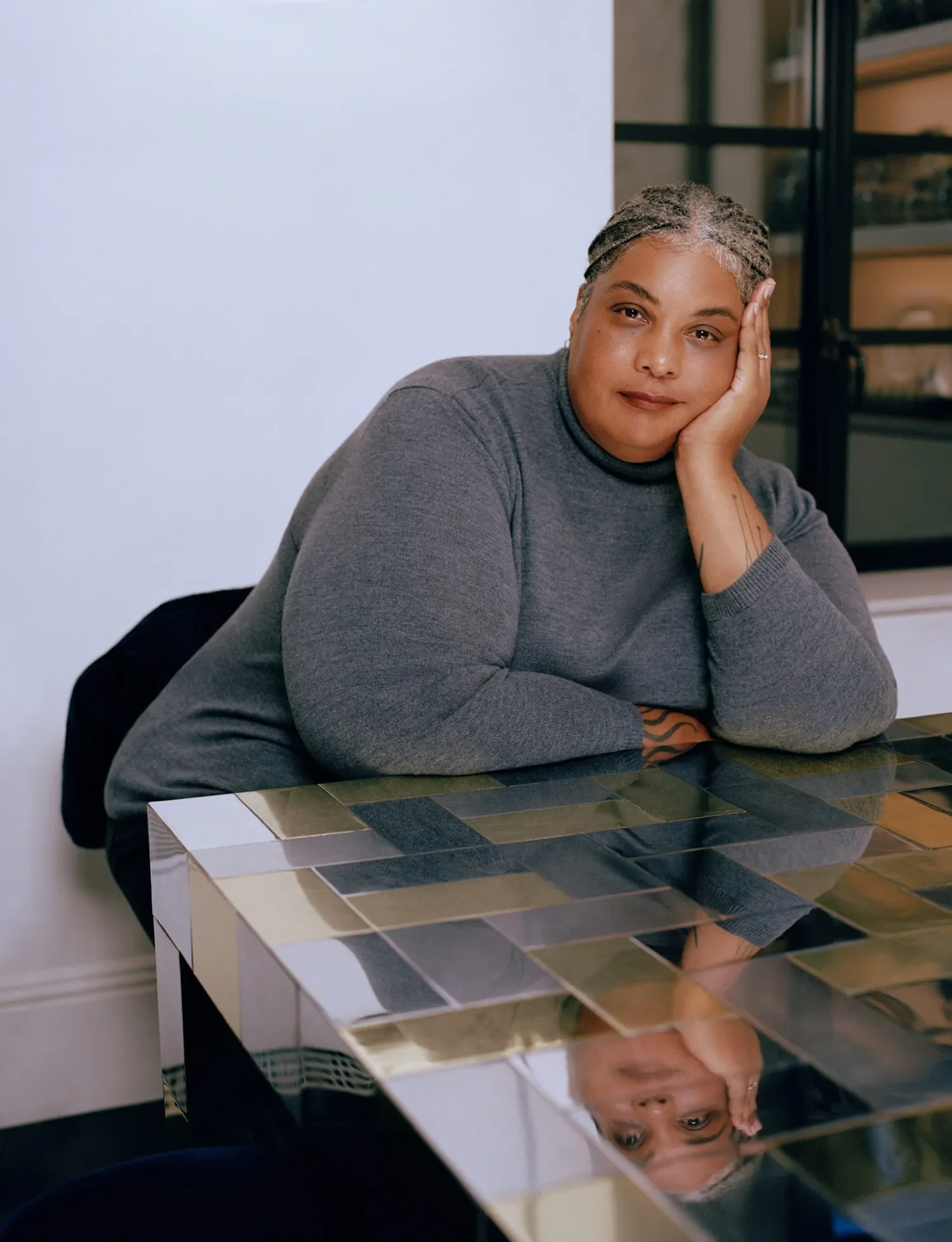
Writer and editor Roxane Gay brings her curatorial eye to the next chapter of The Rumpus, continuing its legacy of amplifying queer voices while making room for new stories from the margins. Gay is the bestselling author of Bad Feminist, Hunger, Difficult Women, and An Untamed State, among others, as well as a contributing opinion writer for The New York Times. She also publishes the newsletter The Audacity and works across TV and film.
“Literature creates connection, empathy, and possibility,” said Gay. “The Rumpus has long been a space where writers can take risks and readers can encounter perspectives that move them. Debbie and I are honored to steward the publication into its next era where the most vital voices of our time don't just exist, they thrive and lead the conversation.”
Millman, meanwhile, is bringing new energy to how The Rumpus looks and feels. The site has undergone a complete visual overhaul led by Santiago Carrasquilla, founder of the award-winning creative studio Art Camp.
Millman is a designer, author, educator, and the founder and host of Design Matters, one of the world’s longest-running podcasts. Over the past two decades, she’s interviewed more than 700 creative thinkers and makers. The show has earned a Cooper Hewitt National Design Award, multiple Webby Awards, and countless other accolades.
With a redesign, The Rumpus puts the reading experience front and center, focusing on accessibility and creating space for all kinds of storytellers, from established authors to writers finding their voice for the first time. A key new initiative is El Alboroto, which will publish original work in Spanish and create a distinct space for Spanish-language writers within the magazine. The initiative will be led by editors Alejandra Márquez and Vasthi Jean-Michel.
We spoke with Roxane Gay about what’s changing at The Rumpus, what isn’t, and the legacy she and the team hope to carry forward.
Attia Taylor: It’s so nice to meet you. I’m a huge fan, and Hunger is one of my favorite books, so it’s really an honor to speak with you.
I’m excited to learn more about The Rumpus. It’s such a mainstay in the literary world, and it’s changed hands quite a bit over the years. What made you and Debbie Millman want to be part of its next chapter?
Roxane Gay: I've been affiliated with The Rumpus for a very long time now. I started publishing with The Rumpus probably in its first year, if not its second year. And then I was an essay editor, so there's a long history there, and it's a very positive history.
The Rumpus has always been a home for emerging and established writers, and so I was very happy to be able to further that tradition. When Debbie and I bought The Rumpus, at first I wasn't sure that I had the capacity to take it on because I do know that it takes a lot of time and energy to run a magazine of any kind, and a lot of the work is not particularly glamorous.
And that's okay. I don't need it to be, and it has to get done nonetheless. Debbie and I both love supporting other creative people, and I wanted to make sure that we could keep The Rumpus alive, at least for as long as we can. And so, when Allison Sinclair, the previous owner, was looking for a new owner, we decided to take it over and see what we could do with it.
I've always wanted to be able to run a literary magazine where we can pay people well. I wish we could pay them more, but we do believe that work deserves compensation, and so we have tried to prioritize that while also prioritizing the quality of the writing that we're publishing.
I'd love to hear more about how you all approached the design, and how the design honors the voices that you're trying to lift up.
Debbie spearheaded the design because she is a world-renowned designer. We worked with Santiago Carrasquilla of Art Camp. One of the key ideas she had is that she wanted the logo to look different every time you look at the website, and so she came up with this idea of a dynamic logo, and then Santiago and his team were able to execute that idea in such interesting ways.
We're still sort of getting that fully working on the website, but it's partly there when you run your mouse over the title of the magazine. The other thing we wanted to do was to be very design forward, and yet make sure that the design would not overwhelm the writing itself.
A lot of times people over-design magazines. There's this beautiful column system at play that you can't necessarily see, but the grid is there. It’s very typography forward, and really kind of letting that dominate because we are a word-forward magazine. The design really prioritizes the fact that we publish writing from writers.
It's gorgeous. Very warm and inviting, but also straightforward. Are you planning to bring print elements into this? Or are you staying digital?
Right now, we're a digital-only magazine. We have had conversations about maybe doing some kind of print element, like a print annual. We firmly believe in being ambitious, but also walking before you run. So we have spent the past year and change really putting in stronger systems and really getting our feet on the ground steadily.
We've launched a few initiatives and wanted to focus on doing those and doing those well before we try to introduce a print element, because I have run a print magazine before. And it's not even the printing that kills you, it's the shipping. We're thinking about it, but we don’t know what it could look like yet. It would be something that happens once a year more than monthly or quarterly.
You spoke about initiatives and programming and there were a ton of Pride related programs back in June. What does community programming look like at The Rumpus?
One of the key things that we try to do with our programming and initiatives is to center writers because our magazine is nothing without the writers and artists who contribute their work to us.
So we have launched several initiatives including a microgrant program that gives people a $1,000 microgrant and a technology package from Apple. We also have some writing and editorial fellowships to create mentorship opportunities for people. We’ve received very generous funding from Ruth Ann Harnisch and Sukey Novogratz who are our co-publishers, and that has enabled us to do these kinds of things.
And then of course, we did The Rumpus Pride 30. We wanted to do something for Pride because both Debbie and I are queer, and happily so. And we also know that there have been a great many wonderful queer writers who have been published in The Rumpus over the past 18 years.
We wanted to honor that history, so we came up with The Rumpus Pride 30 featuring 30 amazing pieces of work from LGBTQ+ authors in our archive. Then in the month of July, we did What Is Freedom?, where we asked artists, thinkers, writers, and other interesting people, "What is freedom?"
Our magazine doesn't exist in a vacuum. We live in the world. Our writers and our readers live in the world, and we wanna make sure that we are publishing work and creating programming that recognizes that.
I'd love to hear more about the approach you all are bringing to The Rumpus in terms of lifting up queer voices and trans voices. How do you see that fitting in with the programming, but also the works that you accept, and the design as well?
The Rumpus has always been very inclusive, and we are absolutely continuing that tradition. We recognize that great writing comes from anywhere and everywhere, and that there is no single demographic that will produce better writing than another. And so we’re not only interested in diversity in terms of who is writing for us, but what they're writing.
We’re willing to take risks and to publish risky work and to publish work that challenges the status quo and engages with difficult topics. We would not really be doing our jobs if we weren't taking risks. With our design, one of the key things that we've tried to consider, in addition to, of course, the aesthetics, is accessibility, and we had worked very closely with WordPress to make sure that the site was as accessible as possible for different kinds of readers.
We’re doing our very best to make sure that what we're doing speaks to as many people as possible, but we're also not trying to create universal work in that it's not for everyone, and that's not the goal. We hope that everyone can find ways to connect with the work, but we love specificity and unique voices.
You and Debbie Millman are both powerhouses in your own right, whether it's design or literary work. I know you've worked together in the past, but how has the relationship been since you started working on The Rumpus together?
We’re married, so that is the most important relationship, but we love collaborating and working together, and to date we have done so very well. One of the key things that we've done with The Rumpus is that we have different focuses, so that we each have our own areas of interest and responsibility, and that really allows us to share that workload in a very equitable and productive way.
We make major decisions together and I defer to her expertise on the things I know she's an expert on. Like, for the design, when she asked my opinion, I would just tell her, like, "Oh, that looks nice." I'm not a designer, so I trust her. She has exquisite taste, so we also trust each other to lead in the areas where we should lead.
What are your hopes and dreams for The Rumpus? Where would you like to see it go?
A lot of times when people take over magazines and they say things like, ‘We're gonna change publishing, and we're gonna break new ground.’ I don't know that we're gonna do that. What I do know, though, is that we’re gonna maintain a tradition of excellence. We are always going to prioritize excellence, unique voices, and risk-taking, and we're going to make sure that we're paying writers.
I don't know how long we'll be able to sustain that, but we can do it for now, and we're very excited to. Maintaining longevity, preserving this very rich archive, and also creating more space for emerging writers is a great goal. And also hopefully bringing more people to our pages to engage with what we're doing and to read our amazing work.
We have so many lovely writers who publish with us, and they deserve all of the attention in the world. I hope that we can continue to grow our audience.