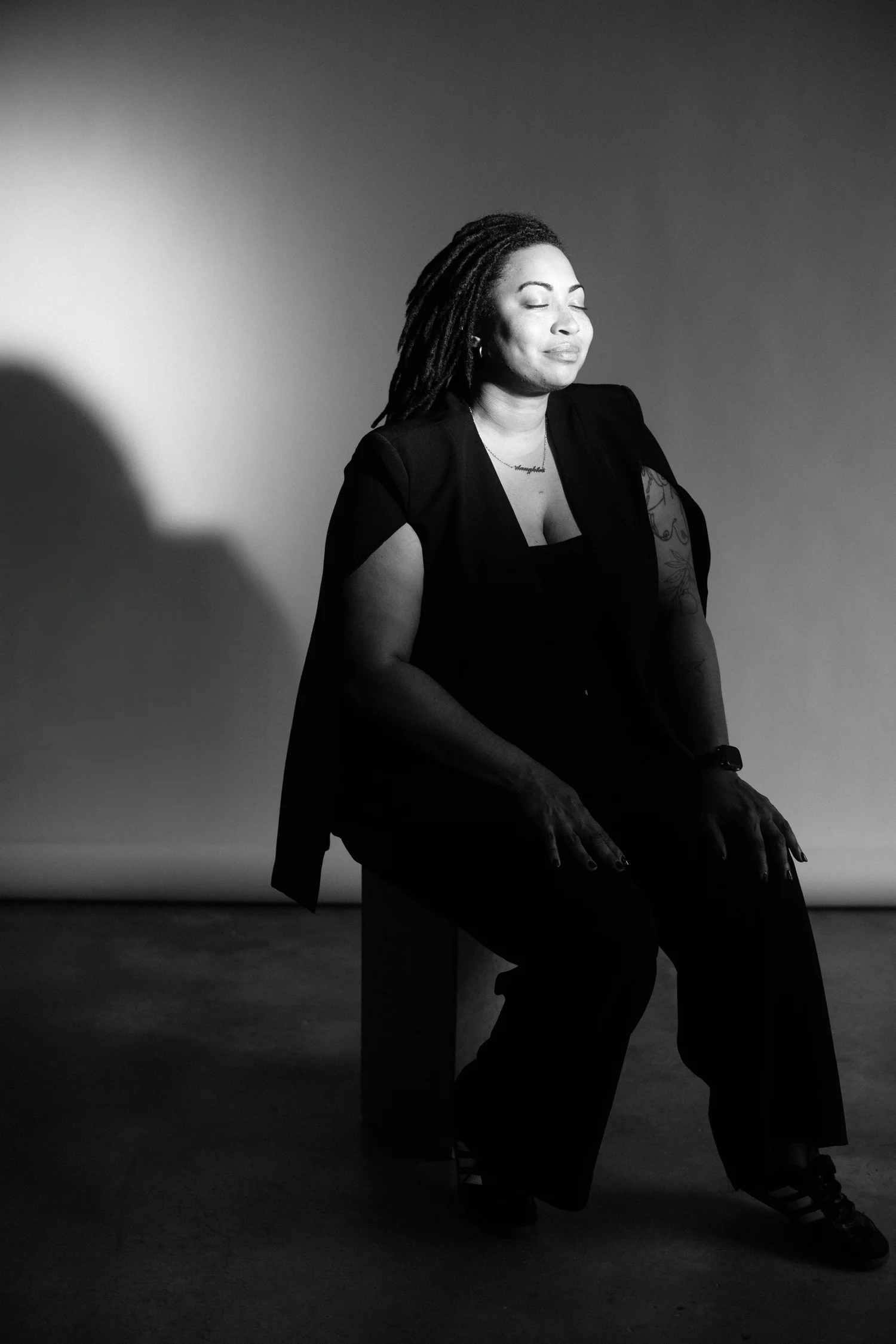
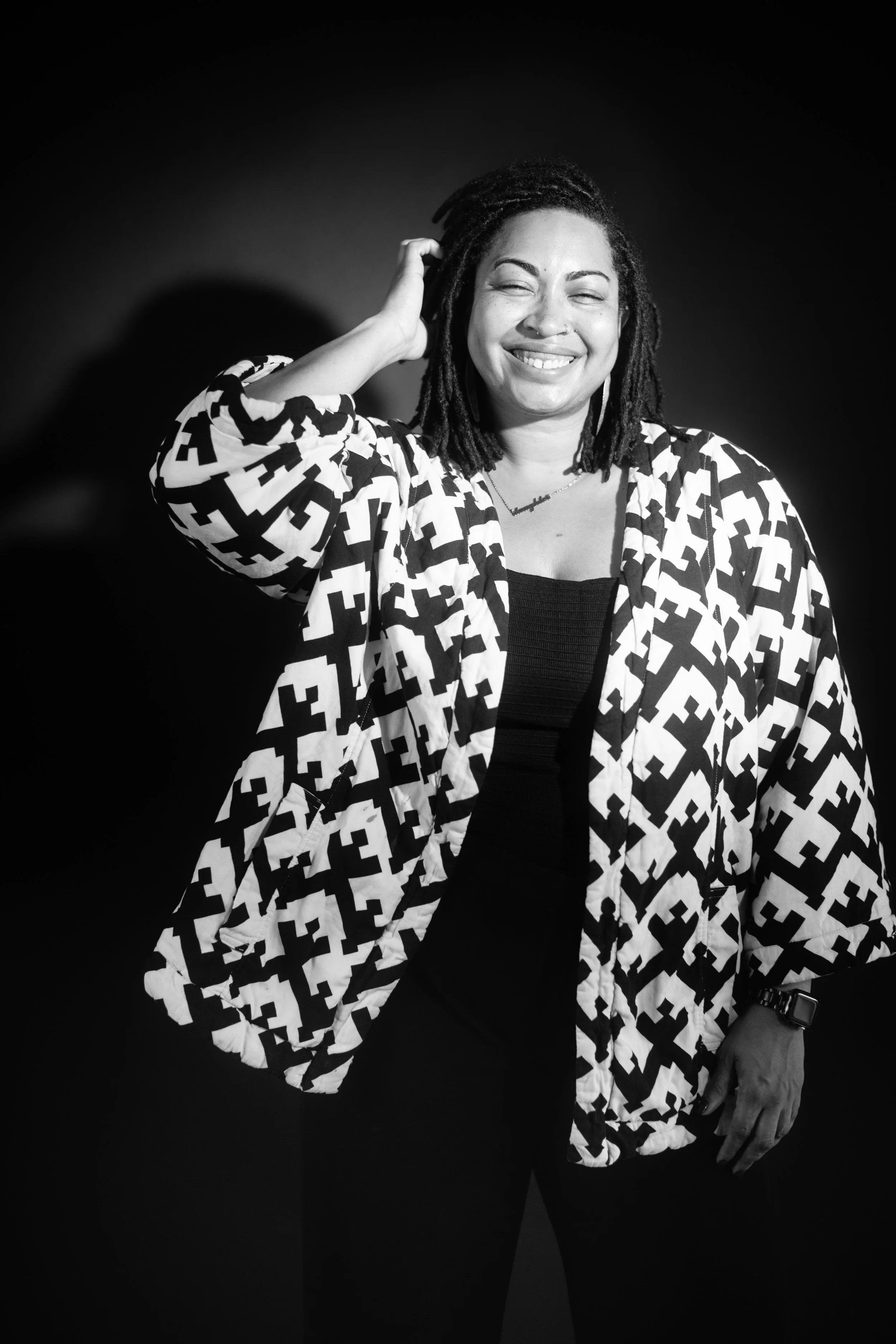
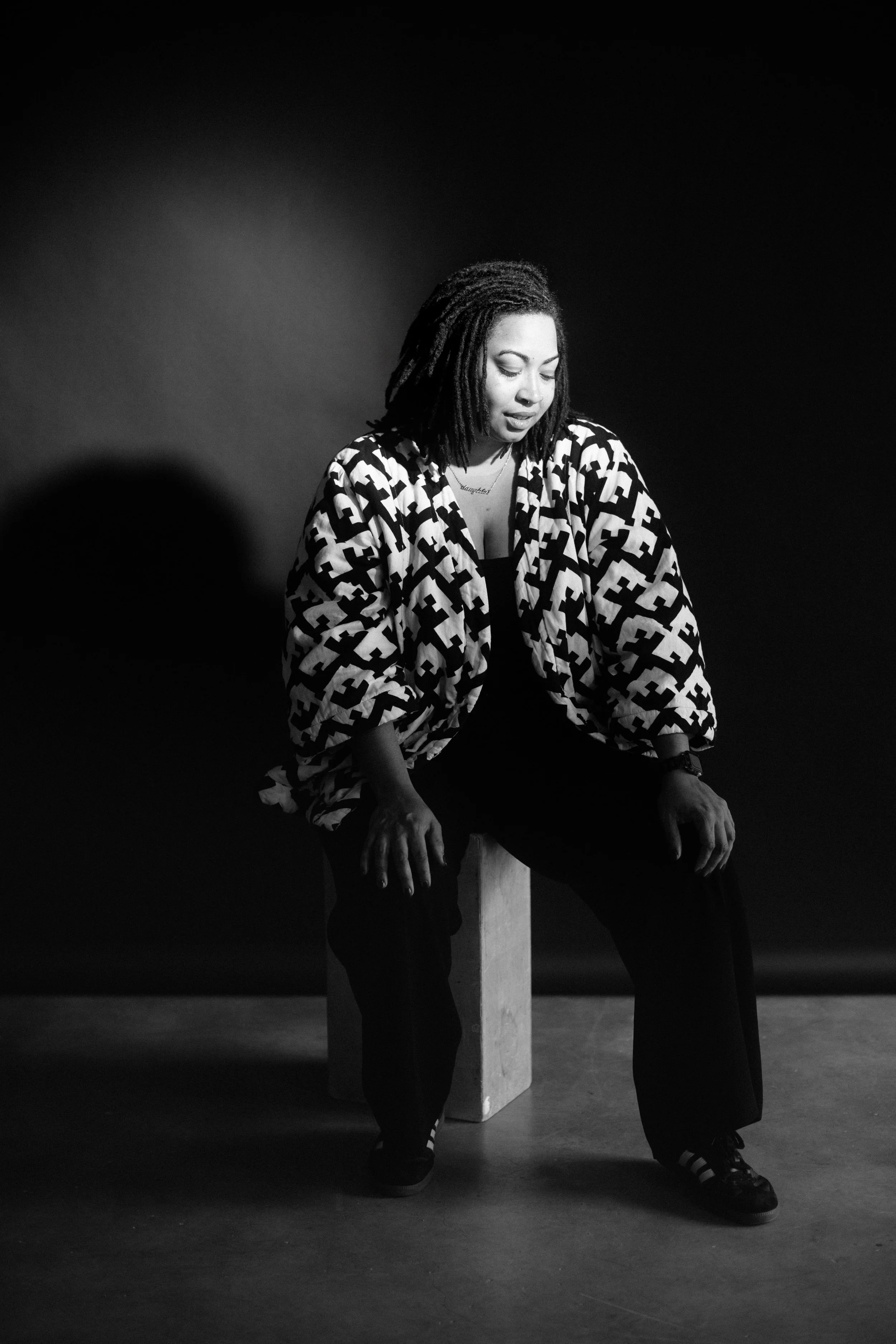
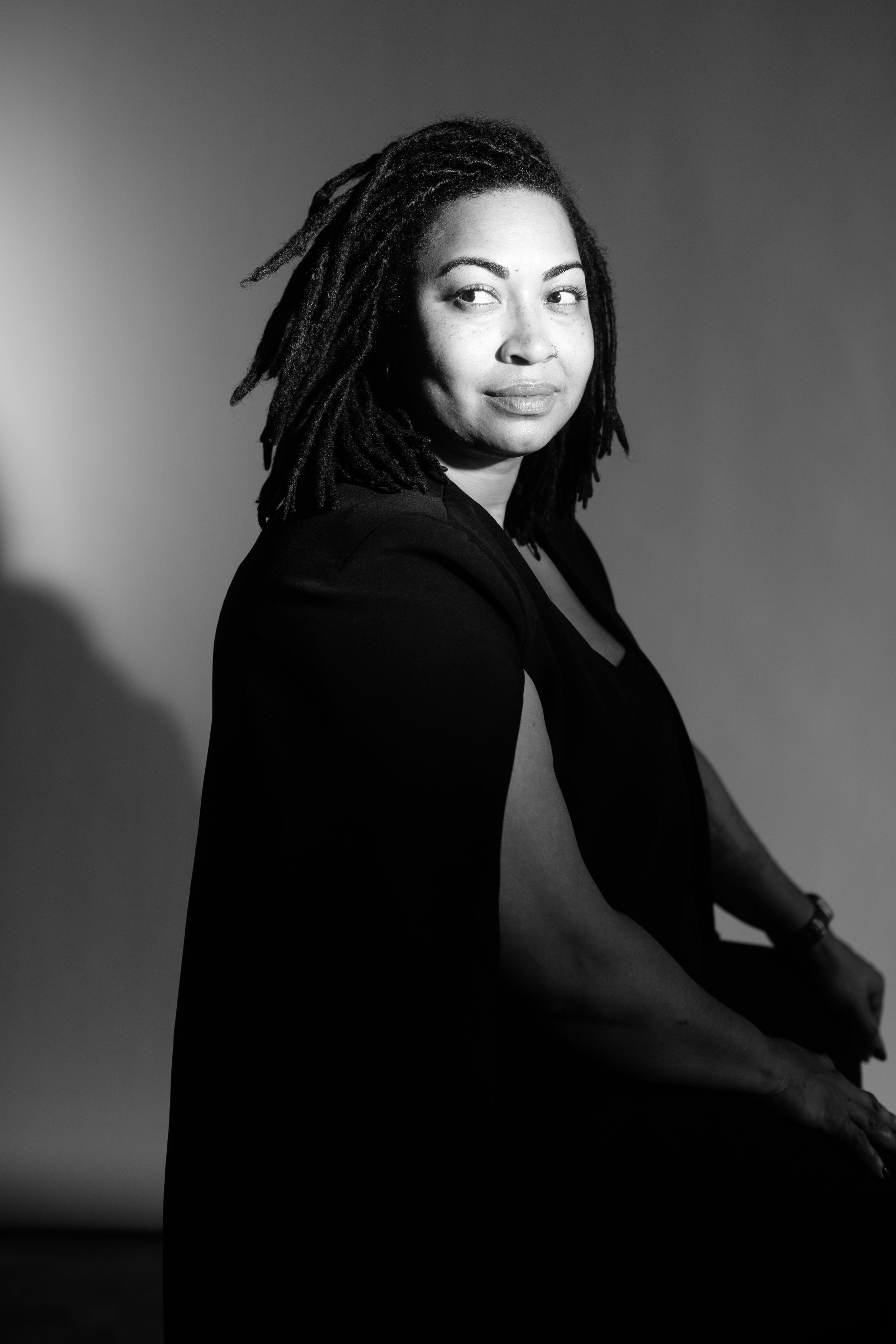
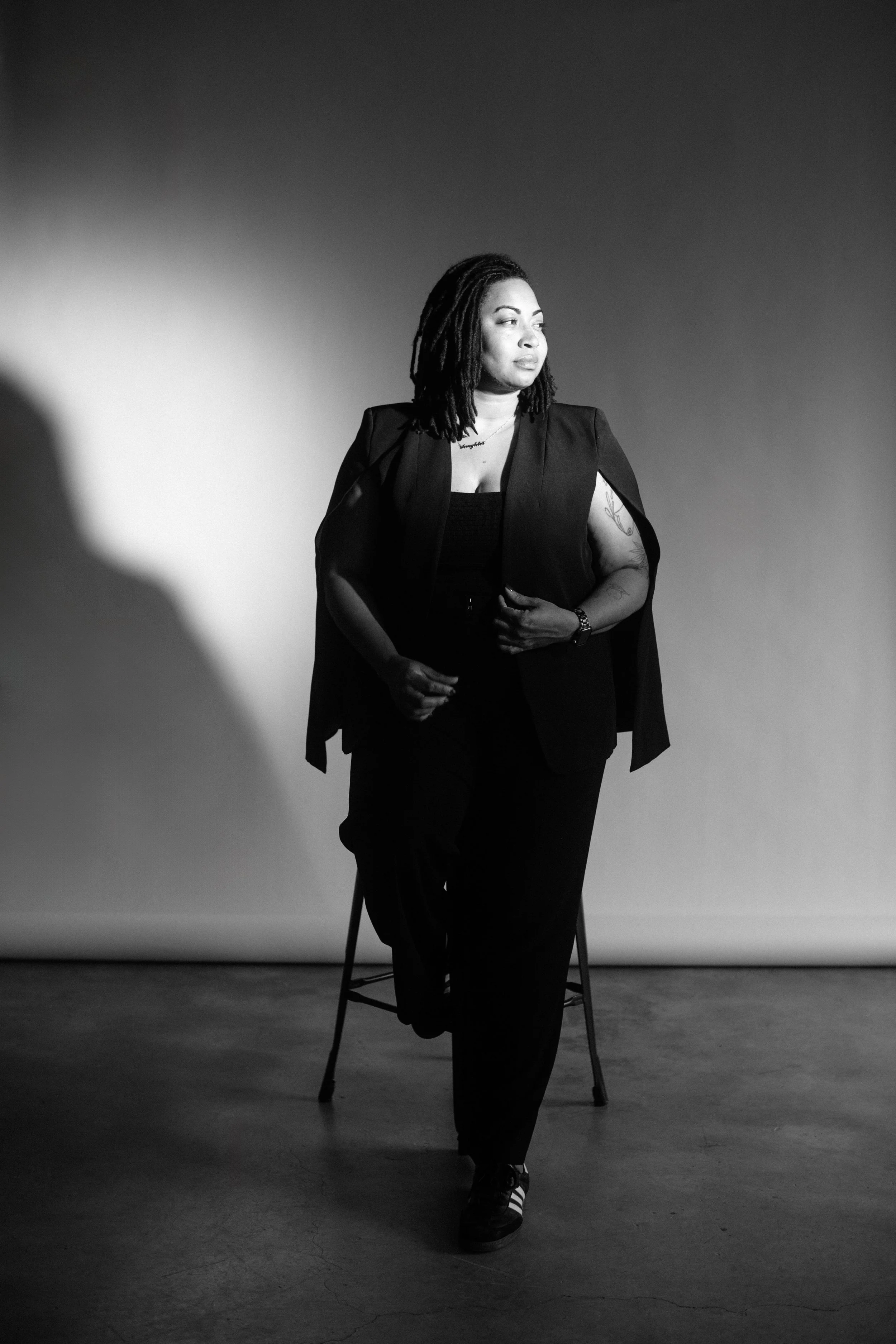
Rachel Cargle is a national treasure. As an author and activist, she has championed mental health support for women and girls. Through unspeakable grief of her own and the challenges that come with being a Black woman in America, she fearlessly shows up for work in a way that feels authentic, loving, and rooted in care. In 2018, she founded The Loveland Foundation, offering free access to mental health care for Black women and girls.
“All the work that I do, specifically this, is a reflection of what I’m going through. A reflection of what I understand I need as a Black woman.”
In 2025, Rachel Cargle reached out to us about finding a space for her work around grief and what it means to build a grief practice. As the guest editor of Womanly’s ninth issue, out this fall, Rachel helped shape a collective of works from writers, educators, photographers and more on the topic of loss, healing, and the elusive nature of grief. “I felt like Womanly was the most apt platform—the most apt container or vehicle—for a deeper, more thoughtful, and, in some ways, lighter, more nuanced conversation about grief.”
In conversation at our cover shoot last month in Brooklyn, Rachel shared more about what a grief practice is, why it matters to have grief language, and why she’s talking about it right now.
What is grief to you?
I'm coming to understand that grief is just sitting with change. Because a lot of the conversation we have is looking at the way loss causes us to grieve. There are big changes when we lose someone: the way we understand our days, the way we understand ourselves.
I'm learning that those shifts — because of grief — also happen in our work. Those shifts happen not necessarily when someone dies, but they just are out of our lives in one way or another. Tending to grief is something that we do because change happens so often in this lifetime.
As the founder of the Loveland Foundation and as someone who champions mental health, what does a grief resource look like and why do you think it's necessary?
One of the biggest grief resources is language. Being able to have language for what we're experiencing, what that experience is, and how that experience shows up in our lives.
So many of us are walking around naming the other things that grief can look like: anger, sadness, frustration, irritability. But when we start understanding and using the language of grief, we can really start to be in relationship with it as opposed to trying to get away from it or trying to figure out ways to not make it true for us.
Language has seemed like such a tool for people to say, ‘oh, that's what I'm feeling. This is how I can express it. Other people are saying the same thing. So I'm not alone in this experience.’
I can write out my feelings as well. And having this resource that can remind us that there is a whole container full of the language we need to recognize where we are and where we could go with our grief. It's also holding on to a collection of others in the spaces we're in.
We're super grateful that you reached out to us about a resource on grief. I like to think the issue theme finds us. It was really timely because we were just beginning to think about the topic for Issue No. 9.
Once you were onboard as guest editor and the call for submissions went out, we saw an overwhelming amount of submissions and inquiries around this topic. Why do you think the response was so big?
It's so interesting how much excitement came up around the opportunity to talk about grief.
Traditionally bringing up this topic and bringing it to the forefront of a publication, we would think, well, who's going to really want to speak to this? Or who's going to really want to touch on this topic? Which is a big reason why I wanted to, because I feel we need more engagement with each other around the topic.
So when I came to [Womanly] wanting to do something around grief, I had already had an idea of how badly people needed an outlet to explore grief with themselves through their own arts, through their own creativity, but also to be witnessed in it, to witness other people in it.
It just feels like there's an energy of curiosity and an energy of compassion that comes up when we talk about grief, because everyone experiences grief. Everyone.
“It feels like a privilege sometimes, a luxury to get to grieve the way that I need to or want to grieve. I really wish that for everyone.”
There's very few things where I could say all of us relate to this, particularly now where we're having this collective grief around a lot of things happening. I feel that energy is a conduit for healing. Me reaching out to you was part of my own grief practice. How do I want to be in relationship with grief?
I want it to be part of how I show up in the world. So I hope that we possibly unlocked some grief practices from a lot of the people who’re submitting and a lot of the people who’re just excited to read what other people have submitted.
I feel like this will go beyond just what people are able to pick up and experience, but it will start conversations within individuals and communities that will just allow grief to sit with us in a different way than it has in the past.
I can't even put into words how much this has already impacted the way I look at grief, the way I think about grief, and the way grief has impacted my family. What is collective grief? What does that look like right now?
In the interview I did for my piece in the forthcoming issue and just in a lot of my own conversations with actual therapists, looking at what grief is and how it affects us, there's all these different types of grief. And one of them is collective grief and what we're experiencing now.
I mean, there's so many individual things I could speak to, but I'd love to speak to COVID. We're not many years past COVID. We lost a lot of people. And even if we didn't personally lose someone, we know someone who lost someone. Or we had someone in the hospital having a major surgery and we couldn't get to them because of COVID protocol. Or we didn't get to graduate on stage like we wanted to. Or we had to leave the city. Or there was grief after COVID.
There was a lot of grief after grief after grief that came up, change after change after change after change that we not only had to deal with for ourselves. How is this change affecting me as a person, but now how does it affect me as a mother, as a partner, as a business owner, as an activist? We were changed. There is a grief that we did recognize, but did we sit with it and process it? I don't think so.
We're feeling a bit of the compounded grief of sickness, loss, death, politics, war. There are a lot of things that we need to process. Collectively, we are all sitting in it together. That requires a more collective conversation that just is really hard to do these days.
Can you speak to the piece you're sharing for the upcoming print issue?
In the upcoming print issue, I was really excited to write a profile on Charlene Lam. She created a platform called Curating Grief that was a reflection of a grief practice she created that was in direct relation with her work. The piece looks at what she does as a curator and the really excruciating moment where we're looking around at all of our loved ones' things after they pass away.
She is a curator and she decided that she wanted to curate her mother's things; to choose a hundred items that would represent her mother and make that process something that would speak to her grief.
I'm really looking forward to readers being able to get inspired towards their own grief practice after seeing what Charlene was able to do.
Having the language for grief is really important and I think it's also important for us to somatically recognize some things there is no language for.
While I think this issue will give the tool of language, grief is such a specific experience where there are a lot of things there isn't language for. And that’s when we see ourselves in each other's stories.
That’s when we're able to say, ‘oh yeah, that's something I've experienced,’ even though I never had language and maybe there isn't language. Grief comes in waves and grief comes in very weird, specific things that we never even think would be the thing that knocks us over when missing someone.
So to hear another person talk about the smell of soap bringing them to tears or that walking through the grocery store put them into a frozen state because you realized, ‘oh my gosh, this is my first time grocery shopping after someone has passed’ or after this huge change has happened. Grief is a sticky space like that. So I do hope all of the unnameable unspoken things can also be seen in each other's stories and can validate this very odd experience of grieving.
What's a salve for you? What brings you comfort when you're grieving?
My approach to grief became how am I going to be with this instead of running from it. As a Black woman, there's so many things that I'm running from in this world that I didn't want another aspect of my life to be something that I felt I needed to get away from.
And the grief was heavy. I lost my mother, my grandmother, and my sister all in 2022. And it was an identity crisis. All of a sudden I lost the three women in my life, in my lineage, who told me about myself, who told me who I was, who explained to me how to move through the world.
So with that loss and so much of my world shifting, I had to make some decisions whether I was going to drown in this or I was going to figure out how to not only be in relationship with grief, but be in relationship with them.
What does it mean to continue to be in relationship with them? Because quite frankly, we had unfinished business. So I needed to figure out how to continue to be in relationship with them.
My mom and I used to talk super early in the morning. We'd both have our coffee on the phone. So now when I sit and have my coffee in the morning, I still take that time to tell my mom some things about what's going on. That is a grief practice.
My older sister, Michelle, was 13 years older than me. So by the time she was in her first apartment, I was a little kid who would go visit her and she would always be blasting Lauryn Hill. So now when I hear Lauryn Hill, I pause for a moment and I think about Michelle. That is a grief practice.
And as far as my grandmother, after all of these deaths happened, I decided to move back home to Ohio, to Akron. I was looking for a house, and my grandma's house was on the market, and I got it. So being in and tending to that house that my family had to let go of when she got Alzheimer's and she moved in with my uncle…that's grandma's house. That's where I know Thanksgiving. That's where I know Christmas.
Being able to purchase grandma's home and tend to it and redo the lawn and the garden. I smell her when I open cabinets sometimes. And that is my grief practice. How I get through my grief is to be with it. Crying when I need to cry. And also laughing when I get to laugh.
The both and of grief.
We can get stuck thinking that we're supposed to grieve a particular way. So giving myself permission to let my grief look however I want my grief to look like. It feels like a privilege sometimes, a luxury to get to grieve the way that I need to or want to grieve. I really wish that for everyone.
It's difficult for a lot of people to face the level of grief you’re facing, the way you're facing it. Not looking away and allowing it to be. You're getting through something while also supporting people in their grief journey. And that's really amazing.
If you look at any facet of my work, it's purely what I'm going through and figuring out a way to be in conversation with people about it. The Loveland Foundation started because I was getting therapy and I had a Black woman and I was like, ‘damn, every Black woman deserves to get therapy in this way.’
I also own a bookstore back home. I moved back home and I missed the great quality literary spaces that New York City has, so I opened a bookstore in my hometown. My work has been an ongoing self-exploration, recognizing that other people have shared experiences and using my platform to gather around it.
Subscribe to our newsletter for updates on the release of Issue No. 9.