
Understanding Your Blood Pressure Numbers
NEED TO KNOW
SPECIAL ISSUE: HIGH BLOOD PRESSURE
WORDS -Family Nurse practicioner, Terri Fleming, APRN, FNP-BC, AAHIVS
ILLUSTRATION - Jordan Cannon, David Zhou, Sarah Etherton
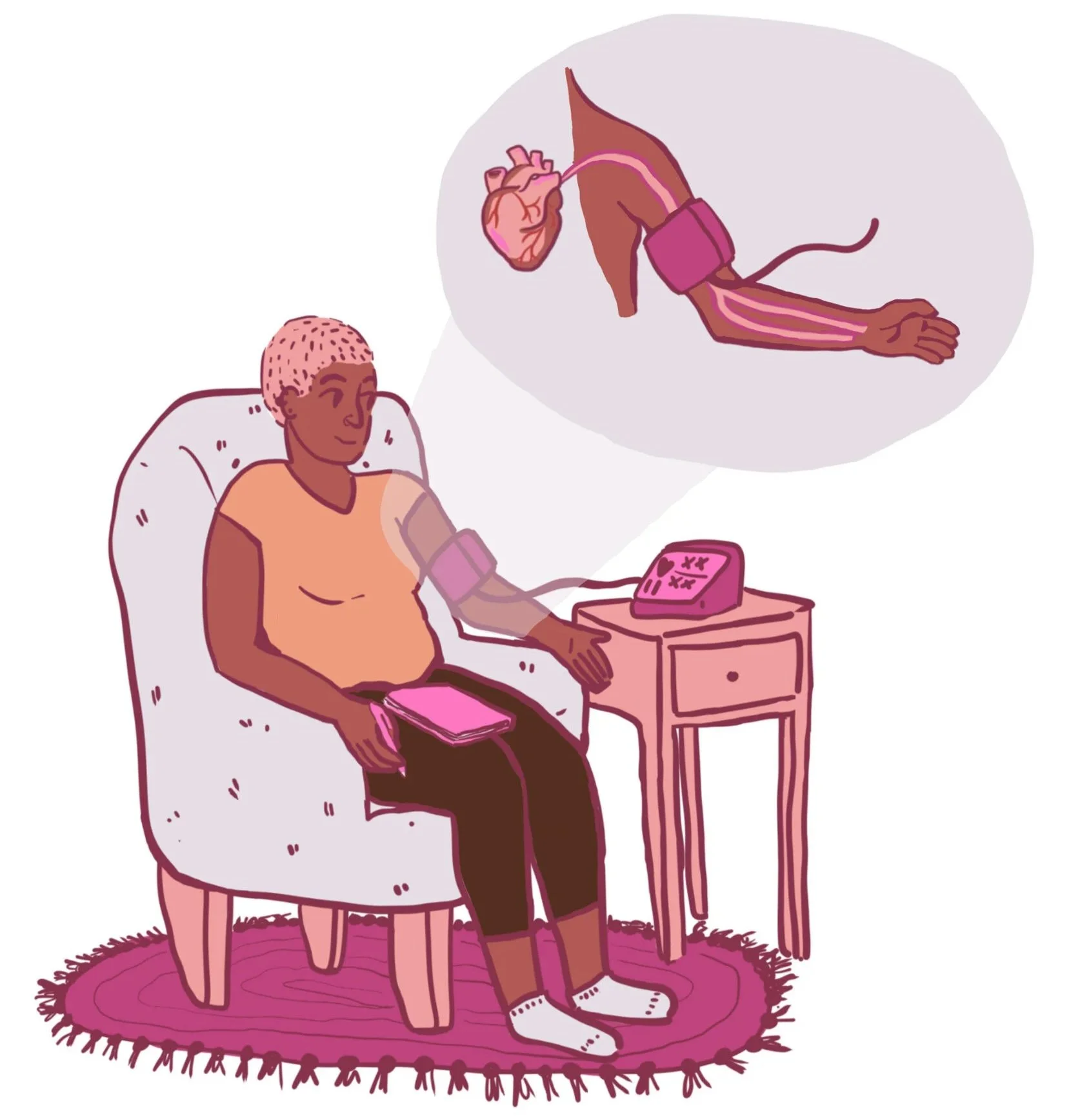
Knowing your blood pressure numbers, what they mean, and how your diet affects them is empowering. The only way to diagnose and manage high blood pressure is to frequently take readings and keep track of these numbers over time. Because many people don’t have symptoms of high blood pressure, monitoring your blood pressure and making smart food choices are key preventative measures.
A blood pressure monitor is a tool you can use to measure your blood pressure at home. If you have experienced healthy blood pressure numbers consistently as a child at annual check-ups, you should continue to have your blood pressure read at least every two years through adulthood. If you’re at risk for high blood pressure, your doctor may advise you to take your blood pressure reading more frequently, as often as twice a day. Cuffs can be prescribed by your health care provider, or bought online or at your local pharmacy.
Ask your health care provider to recommend an easy-to-use blood pressure monitor, and make sure the cuff fits your arm to produce accurate readings. If you’re uninsured or your insurance doesn’t cover an at-home monitor, many pharmacies have blood pressure reading machines that are free or low cost for public use. Using these resources for monitoring your blood pressure at home can help you notice early changes in your blood pressure numbers and support you in learning how to lower blood pressure with lifestyle and dietary changes.
Once you start regularly checking your blood pressure, try to take readings at the same time every day and keep track of both numbers in a chart, journal, or note on your phone. Here’s a handy blood pressure diary that you can print! Save these recordings in a place you can easily access them, and be sure to bring these records to every health care appointment. Monitoring blood pressure at home over weeks and months gives your provider more complete information and helps with understanding blood pressure numbers beyond a single reading in the clinic.
The Numbers:
Your blood pressure reading measures the force of your blood moving through your arteries when your heart beats and when it rests. Blood pressure is recorded with two numbers: a systolic number over a diastolic number. Understanding blood pressure numbers—both systolic and diastolic—can help you recognize when your readings might suggest high blood pressure and when you may need to ask about how to lower blood pressure safely.
Systolic = Pumping: The systolic number is the top number on your reading and measures the pressure on artery walls when the heart is beating and pumping blood.

Diastolic = Filling: The diastolic number is the bottom number on your reading and measures the pressure on artery walls when the heart is resting between beats and filling with blood.
Which number is more important?

It's common for providers to focus on systolic blood pressure. Higher systolic numbers are a major risk factor for cardiovascular disease for people over 50. Over time, systolic blood pressure may rise for many reasons, including increased stiffness of large arteries and buildup of plaque in arteries as we age. This is why high blood pressure is often called a “silent” condition and why monitoring blood pressure at home with a blood pressure monitor can be so useful.
What about heart rate?
Heart rate and blood pressure are two key numbers that measure the functioning of your cardiovascular system. Your blood pressure is the force of your blood moving through your blood vessels, while your heart rate is the number of times your heart beats per minute. An elevated heart rate is normal during exercise or stressful situations, but can be concerning if heart rate is elevated at rest, as it can suggest a variety of other conditions such as cardiac arrhythmias, anxiety, or hyperthyroidism.
Diagnosis:
The following stages can help you understand your numbers in the context of different stages of hypertension. Healthy numbers can depend on other factors and should always be discussed with your health care provider. One high reading doesn’t automatically mean you have hypertension.
Healthy: systolic and diastolic less than 120/80
Elevated: systolic between 120–129 and diastolic less than 80
Stage I Hypertension: systolic 130–139, and diastolic 80–89
Stage II Hypertension: systolic 140 or greater, and diastolic 90 or greater
Hypertensive Crisis: systolic greater than 180 and/or diastolic greater than 120.
Some people in hypertensive crises may not have any symptoms, but it is still important to contact your health care provider immediately if you have a blood pressure reading that is this high.
If your blood pressure is this high and you experience symptoms such as chest pain, shortness of breath, numbness in any extremity, weakness, or changes in vision or speech, call 911.
Common symptoms and signs of high blood pressure:
High blood pressure is often symptomless, but when signs appear, they may include:
Headaches
Dizziness or feeling lightheaded
Blurred or changing vision
Shortness of breath
Chest pain or pressure
Heart palpitations or irregular heartbeat
Fatigue or confusion
How dietary choices impact blood pressure:
What you eat directly affects blood pressure. Diets high in sodium, added sugars, and unhealthy fats can raise blood pressure, while diets rich in fruits, vegetables, whole grains, and lean proteins can help lower it. Reducing salt, limiting processed foods, and choosing fresh, minimally processed options support healthier blood pressure levels.
5 worst foods for high blood pressure (and what to avoid):
Processed meats (bacon, sausage, deli meats) – very high in sodium and preservatives.
Fast food and fried foods – loaded with salt, saturated fat, and trans fats.
Salty snacks (chips, crackers, packaged popcorn) – concentrated sources of sodium.
Sugary drinks (soda, sweet tea, energy drinks) – excess sugar contributes to weight gain and higher blood pressure.
Highly processed frozen or packaged meals – often contain hidden salt, sugar, and unhealthy fats.
To manage your high blood pressure, try to avoid or limit these foods and instead focus on fresh fruits and vegetables, unsalted nuts, beans, whole grains, low-fat dairy, and lean proteins such as fish or skinless poultry. Small, consistent dietary changes, combined with regular monitoring, can make a meaningful difference in your blood pressure over time.


