For many immigrant communities, moving to a new country can mean losing more than familiar ingredients. It can also mean losing the farmers, seasons, preparation methods, and shared rituals that once made food feel safe and nourishing. In a new place, your inherited recipes may remain the same while the food system, your body, and relationship to both begin to change.
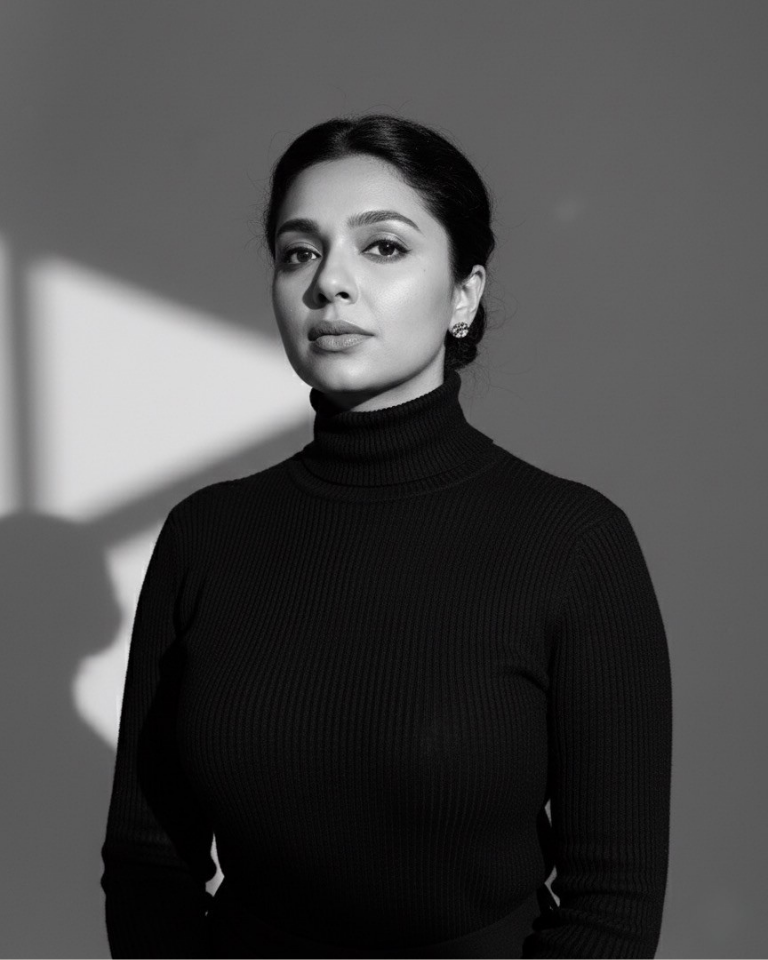
In this conversation, NYC-based chef Zehra Mirza speaks with Neha Shah—a Nutrition Practitioner, Holistic Health Expert, and founder of Diaspora Nutrition—about the quiet grief that can happen when the world around your diet drastically shifts. Trained in modern nutrition science at the Institute of Integrative Nutrition (IIN) and deeply informed by ancestral food systems, Neha Shah specializes in gut health, metabolism, and sustainable dietary practices, particularly as they relate to migration, lifestyle change, and your long-term health outcomes.
Mirza, a Pakistani-born chef, world-traveler, and international policy expert, speaks with Shah about food colonization, the sacredness of ancestral knowledge, and bringing culturally responsive care to immigrant communities in the South Asian diaspora and beyond. Helping us understand how immigrant communities can embrace modern science without abandoning the traditions that have sustained them for generations, carrying that wisdom forward with curiosity, confidence, and sustainability.
“Why were we having gut issues? Why were we no longer digesting the same foods we had eaten back home? Those questions led me into deep research. ”
Can you tell us a bit about yourself and how your personal and professional journey led you to focus on nutrition and the decolonization of food systems?
Of course. I'm Neha, and I'm the founder of Diaspora Nutrition. I'm an Indian American who came to the United States with my family almost a decade ago. I'm a software engineer, and that background in logical thinking helped me understand the health decline my family experienced after moving here and navigating the U.S. food system.
We suddenly found ourselves asking questions we had never asked before. Why were we having gut issues? Why were we no longer digesting the same foods we had eaten back home? Those questions led me into deep research because I couldn't find clear answers from doctors, dietitians, or nutritionists—even those we consulted from our home country. What I realized was that nobody was talking about how immigration affects our relationship with food. This wasn't limited to the South Asian diaspora. I saw the same gap affecting Latino, European, Chinese, Japanese, and many other immigrant communities coming from longstanding Eastern traditions.
So I decided to take it into my own hands. I studied nutrition and began reconnecting with my own cultural wisdom. When I saw my family's health improve—our digestion, our energy, our skin—I realized there were so many women and families looking for the same answers without a community or trusted place to turn.
That's what became my mission. There are communities for careers and mental health, but I didn't see one centered on nutrition for immigrant communities.
Given your experience working with immigrant populations in the South Asian diaspora, what reflections could you share on how food systems can support or further marginalize certain communities?
There's a certain grief connected to food, especially for immigrants.
When we move countries, we don't just lose access to ingredients. We lose the invisible systems around food—the farmer, the seasons, our grandmother's methods, the smell of fresh produce, the trust in milk and animal products, and the comfort of knowing what is safe to eat.
Many South Asian immigrants continue cooking the same recipes after moving to America. We follow food creators who help us reconnect with our roots. But something still feels different because our bodies feel different. They react to the same foods in very different ways. There’s a quiet grief because food that once made you feel held can now make you feel bloated.
Navigating the food system is exactly the education we need right now. Studies show that a large share of grocery products in the United States are ultra-processed. Even when we prepare the same homemade meals, we're often using ingredients that have been fundamentally altered.
That's why I believe we need to return to a more local philosophy by supporting local economies and local farmers. We need to move from knowing the pharma industry vs knowing your farmer. Just as you have a trusted doctor, you should know the people who grow your food.
Immigrants often experience grief when leaving their home countries, and that grief can shape their relationship with food, health, and belonging. How have you witnessed grief manifest in the communities you work with?
We're losing the traditions that once nourished us.
We're losing the patience around food—soaking legumes and lentils, fermenting yogurt at home, making butter from cultured yogurt and turning it into homemade ghee, eating seasonally, cooking fresh meals, sitting down together, and eating with intention.
Modern life has reduced food to macros, convenience, and calorie counting. Traditional food wisdom understood something much deeper: digestion isn't just a chemical reaction. It thrives on rhythm, emotions, seasonality, and our relationship with food.
When we lose those traditions, our bodies respond differently. We begin seeing symptoms like insulin resistance, fatty liver disease, and the higher rates of abdominal fat that are common in South Asian communities. Those are symptoms. They're signals from the body. Our bodies still carry generations of wisdom, but we often override that intelligence by outsourcing it to food trackers, apps, and an overwhelming amount of conflicting information.
For many South Asian families, food has carried both love and fear. Our grandmothers fed us through abundance. Our mothers often fed us through sacrifice. Then modern wellness taught us to feed ourselves through restriction.
There's a generational tension. One generation tells us to eat more—to support fertility, help us focus during exams, and keep us strong. Another tells us to avoid gluten, dairy, or carbohydrates. That leaves many immigrants trying to understand what nourishment actually feels like. The grief is there. The generational trauma is there. Healing begins when we stop seeing traditional food through guilt and start seeing it as memory, biology, and belonging.
We need culturally relevant health care systems and preventative care that speak to diaspora communities in their own language. That's one of the biggest gaps I see. Modern science has a place, but it needs to be anchored in traditional wisdom because that's the language many of us understand. Scientific terminology can feel overwhelming, but our cultural language already carries generations of knowledge.
We already have that intelligence within us. We need to look inward while also advocating for more culturally sensitive doctors, nutritionists, and health care professionals.
“There’s a quiet grief because food that once made you feel held can now make you feel bloated.”
Can reconnecting with ancestral food systems and Ayurvedic practices serve as a form of healing for communities navigating displacement and grief?
Absolutely. Whether we're talking about Ayurveda, Traditional Chinese Medicine, or other longstanding healing traditions, they all begin with the same understanding: the mind and body are connected, and food is the common thread that connects us all.
In Ayurveda, the gut is the epicenter of everything. It's not only about digesting food—it's also about digesting emotions.
Today, science speaks about the gut-brain connection, the nervous system, and the microbiome. These ideas are now being validated through research, but they've existed in Ayurvedic philosophy for generations. Ayurveda also teaches us that food isn't only about what we eat. It's about how we think, how we regulate stress, and how we care for our nervous system.
As immigrants, many of us live with chronic stress. Practices like yoga, pranayama, meditation, and mindful breathing give us practical ways to regulate our nervous systems while strengthening the connection between mind and body. These practices already exist. The question is whether we're willing to incorporate them into our daily lives.
You've spoken about food grief. You've also introduced the idea of food colonization. What does food colonization mean to you, and why is it important to address both?
Food colonization happens when traditional foods are made to seem inferior, unhealthy, or outdated while Western alternatives are presented as healthier or more modern.
Rice becomes "too many carbs." Ghee becomes "too much fat." Yogurt is replaced with Greek yogurt. Roti and naan become foods to fear because of gluten. This isn't simply nutrition advice. Over time, it teaches people to distrust their own inheritance. That's why I say food grief cannot be addressed without addressing food colonization. They're connected.
Traditional food was never the problem. The problem is removing it from its agricultural and digestive context. When we reconnect with traditional food systems, we're also reconnecting with the communities, environments, and practices that shaped those foods. That's where healing begins.
How can health care and nutrition professionals better support immigrant communities while honoring those traditions?
It starts with cultural humility.
Health care professionals need to understand that nutrition isn't only about nutrients. It's also about identity, history, language, and culture. When recommendations ignore those realities, they're much harder for people to follow. We need practitioners who understand the foods people actually eat, who ask questions before making assumptions, and who recognize that traditional food practices often contain generations of knowledge.
The goal isn't to replace one system with another. It's to build bridges between them so people feel seen, respected, and supported in their health journeys.
Looking ahead, what opportunities do you see for nutrition and public health to become more inclusive of ancestral knowledge, cultural traditions, and different ways of understanding food?
The opportunities are endless, but they have to begin with accessibility.
First, we need to make this information more accessible to immigrant communities. We also need health care systems that are culturally responsive and professionals who understand the language, traditions, and lived experiences of the people they serve.
We need much more research. Very little research has focused specifically on South Asian populations, even though our health outcomes often differ. Without that research, we're missing opportunities to create better solutions. But research alone isn't enough.
The solutions also have to be culturally relevant. We can't reduce every conversation to calories and carbohydrates because that approach doesn't reflect how many immigrant communities experience food. To build a more inclusive public health system, we need to bridge modern science with traditional knowledge. That means learning from Ayurveda, Traditional Chinese Medicine, and other longstanding systems rather than treating them as separate from evidence-based care.
Modern science evolves, and that's important. Nutritional advice changes over time. That's why I see traditional wisdom as an anchor. People often say we need ancient wisdom backed by modern science.
I see it differently. We need modern science anchored by ancient wisdom.
I hope we'll see greater collaboration across disciplines. Researchers, clinicians, public health professionals, and community leaders all have something valuable to contribute. When those perspectives come together, we create solutions that are both scientifically informed and culturally meaningful. Communities shouldn't have to choose between honoring their traditions and receiving evidence-based care. We can, and should, build systems that make space for both.
Many traditional practices are now being validated through modern research, but that doesn't make the original knowledge any less valuable. For me, decolonizing nutrition isn't about rejecting science. It's about expanding our understanding of what counts as knowledge and recognizing that ancestral wisdom and scientific research can strengthen one another.
The goal isn't to replace one system with another. It's to build a more complete understanding of health. I encourage people to stay curious instead of thinking in absolutes. Traditional practices should be explored thoughtfully, just as scientific research should continue evolving. Both have something to teach us.
When we approach nutrition with humility, we're more willing to ask questions, learn from different knowledge frameworks, and recognize that health isn't one-size-fits-all.
When you think about the future of decolonizing food systems, what gives you hope, and where do you see the greatest potential for change?
When we adapt to a new country while staying connected to our traditions, we have the opportunity to reclaim our own narrative instead of allowing someone else to define it for us.
If we don't tell the story of our food traditions, someone else will. When that happens, those traditions become disconnected from the communities that have carried them for generations.
That's why I believe we need to become more vocal. It begins in our homes. When we practice our traditions with confidence, we begin sharing them with our communities, our workplaces, and the broader culture.
That's how change happens.
Have you seen successful practices where people have done that really well—examples that have stayed with you?
I've seen people reconnect with the foods they grew up eating while becoming more intentional about where those foods come from. Instead of relying on industrially processed ingredients, they begin shopping at local farmers' markets and supporting producers who use more traditional methods.
The food itself doesn't necessarily change. What changes is the sourcing. People tell me their digestion improves, their energy improves, and they begin feeling safe in their own bodies again. They haven't dramatically changed their calories or protein intake. They've reconnected with local food sourcing, traditional food preparation, and practices they already understood.
That's why I say the only way to address food colonization and whitewashing is to set our own narrative. We're all speaking the language of modern science, but we're not always owning our own language. We have to do both.
So many researchers and scientists have their "aha" moment when turmeric or ashwagandha is finally studied in a lab. Those practices existed long before they entered scientific literature. We shouldn't wait for validation before recognizing the value of our own traditions.
The goal is not to go back in time. The goal is to bring forward the wisdom that kept us well and adapt it with dignity. We don't need to abandon our traditions to embrace scientific progress. We need to understand them, practice them, and pass them forward. For me, that's what decolonizing nutrition is really about.
I hope the next generation grows up believing that their cultural food traditions are something to value, not something to leave behind. I hope we continue investing in research while also honoring the wisdom that has existed across generations. Those two approaches don't compete with one another, they strengthen one another.
If more communities feel confident sharing their own food stories, we'll have a richer understanding of health, nutrition, and wellbeing. Decolonizing nutrition isn't about going backward. It's about carrying forward the practices that have sustained communities for generations and allowing them to evolve alongside scientific discovery.
Thank you so much for taking the time to speak with me today.
Thank you for creating space for this conversation. I appreciate the opportunity to talk about these issues, and I hope it encourages people to become more curious about their own traditions, ask more questions, and reconnect with the foods and practices that have always been part of their communities.