
Anat Ebgi Gallery presents In the Body of Light, a solo exhibition by Mexican artist Ileana García Magoda. On view at 372 Broadway from March 13 through April 25, 2026, the exhibition marks Magoda’s first solo presentation in New York and her second with the gallery. An opening reception will take place Friday, March 13, from 6–8 pm.
“My painting practice is completely connected to my experience with chronic pain. Each time I experiment with different methods to manage the pain, it directly affects the work. ”
Born in Mexico City in 1985, Magoda studied Graphic Design at the National Autonomous University of Mexico and has exhibited internationally, including with Anat Ebgi in Los Angeles and New York. She now lives and works in Valle de Bravo, a lush, forested lakeside town two hours outside Mexico City.
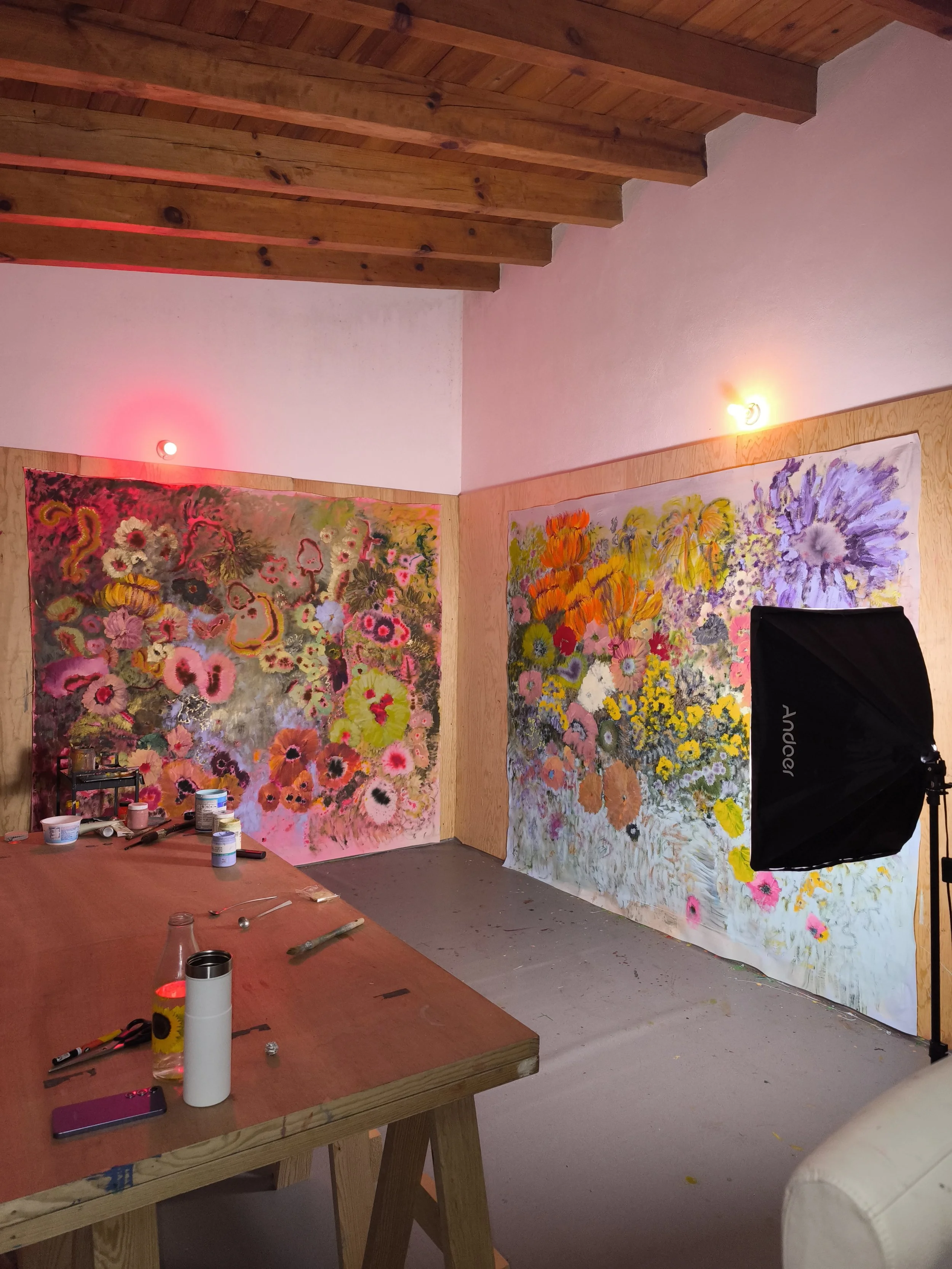
Ileana García Magodas’s studio in Valle de Bravo
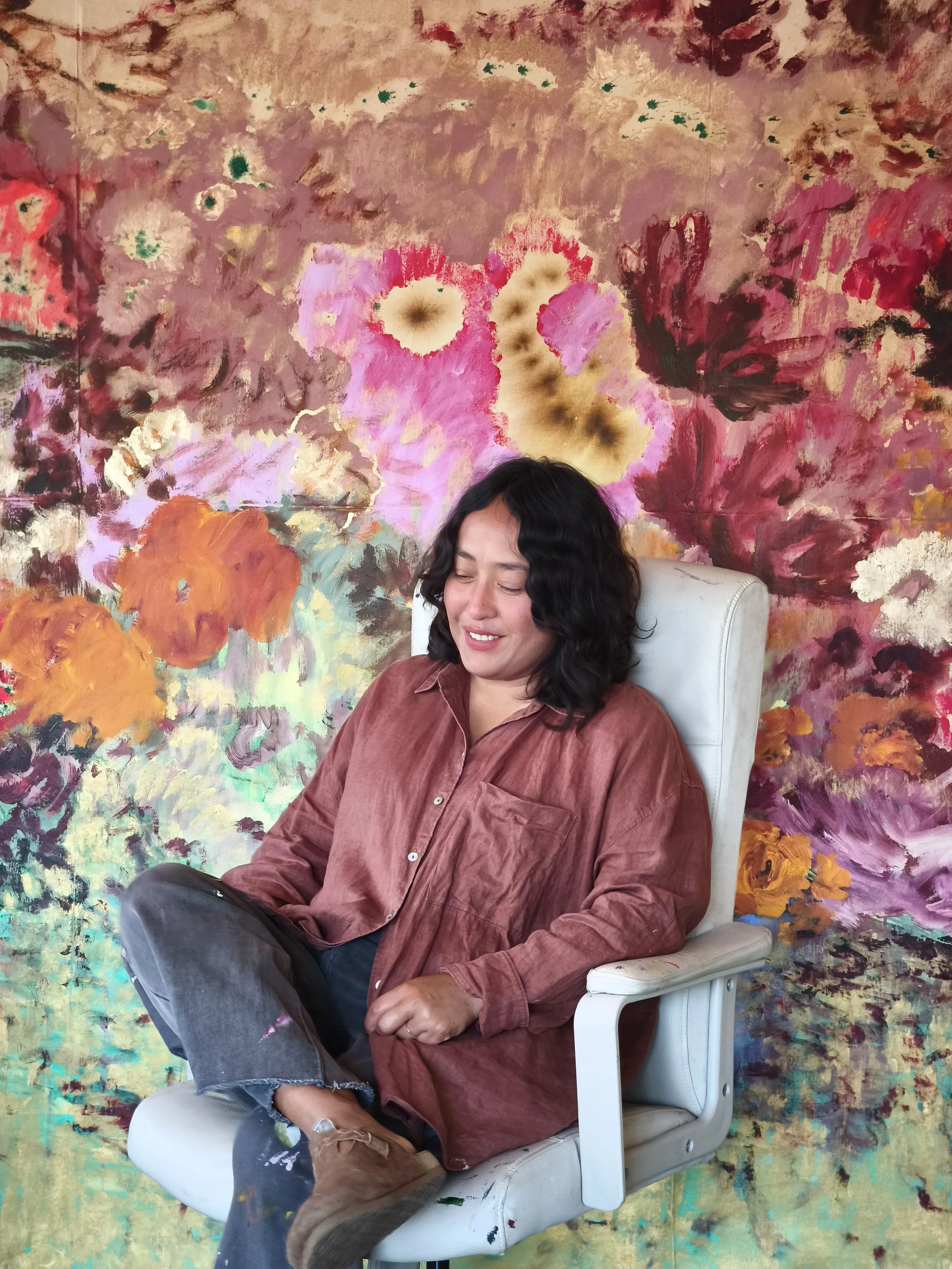
Ileana García Magoda in her studio
Magoda’s paintings begin in the body. Guided by somatic awareness, ecological intimacy, and spiritual receptivity, she translates sensation into color and gesture. Living with chronic spinal pain, she incorporates healing rituals into her studio process, most notably sunbathing before she begins to paint. The warmth on her skin becomes both medicine and material.
“My painting practice is completely connected to my experience with chronic pain,” Magoda says. “How my body feels shapes how I paint—the gestures I make, the colors I choose, everything.” Rather than resisting pain, she works with it. Each method she experiments with to manage it becomes part of the work itself. “In the studio, I’m not trying to escape the pain but to transform it, to translate it into color and form.”
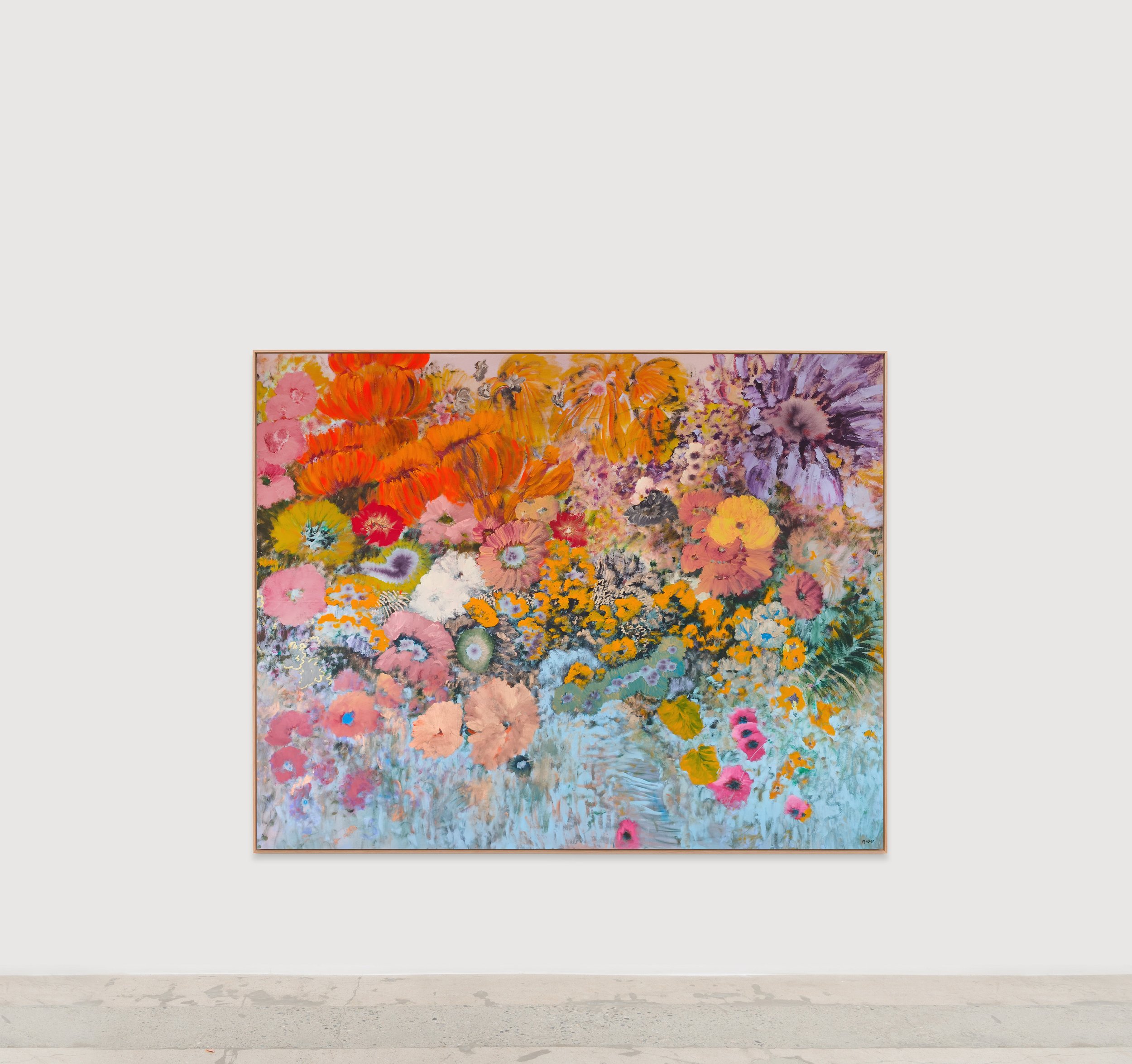
In this magical land, 2026
Since relocating to Valle de Bravo, Magoda has begun working daily in her garden, cultivating native plants and flowers. Tending, trimming, and pressing her hands into the soil have become intimate extensions of her art practice. This hands-on relationship to growth and decay, encountering plants through their sensuous textures, scents, and cycles of life and death, directly informs the floral paintings featured in the exhibition.
The cyclical rhythms of gardening mirror her approach to painting. Canvases are primed with rabbit skin glue and layered with inks, allowing folds, stains, and chance impressions to remain visible as what she calls “scars of life.” The surface becomes a record of touch, pressure, and care.
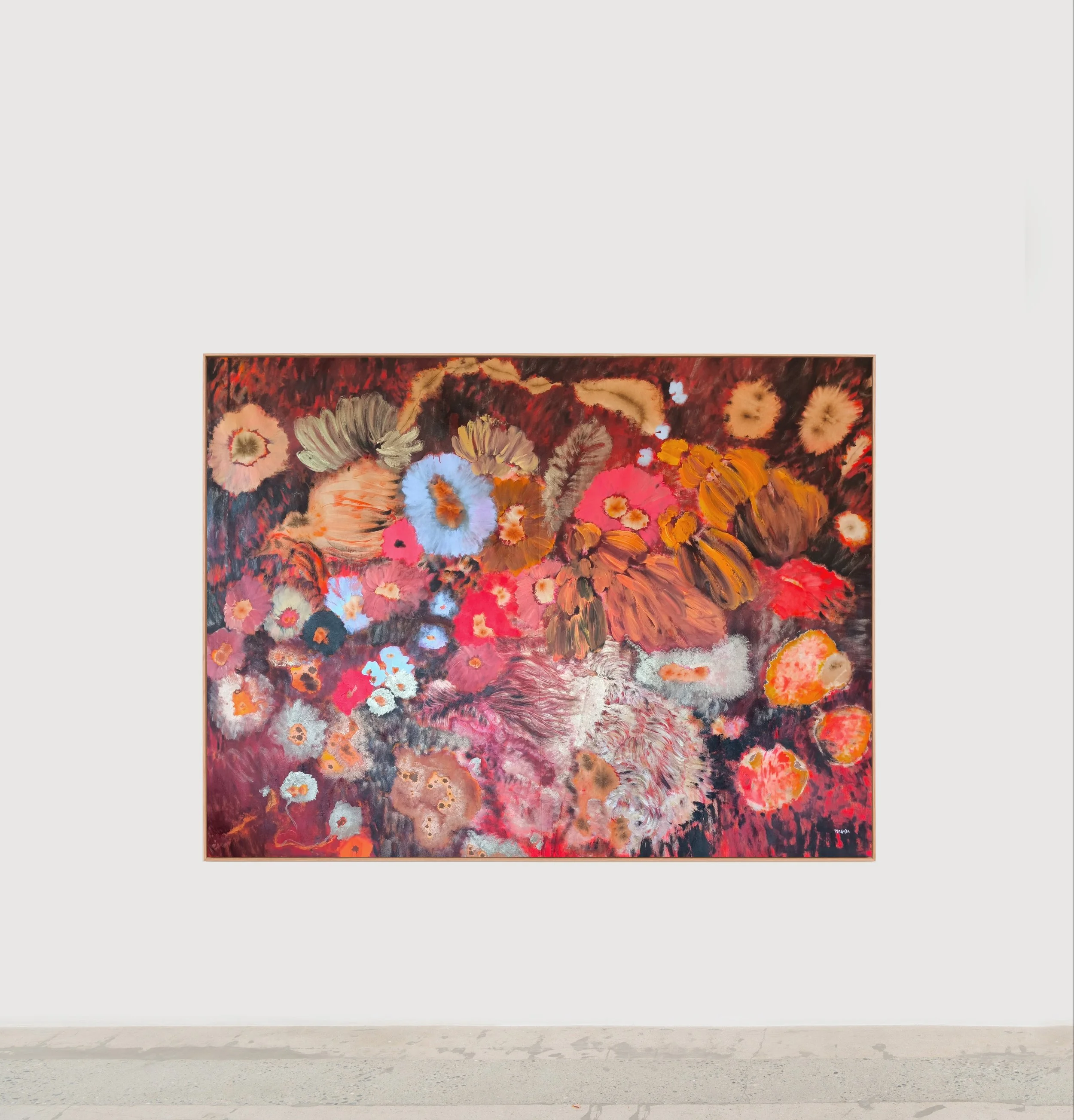
Looking toward the deepest depths, 2026
“Lying in the sun, letting the warmth fill my body, this practice became both healing and a way of seeing,” she reflects. “The paintings I make after these moments carry that presence, that feeling of being held by something larger than pain.” The pain remains, chronic and constant, but painting offers a shift in relationship. “There’s healing,” she says. “Not a cure, but a transformation.”