
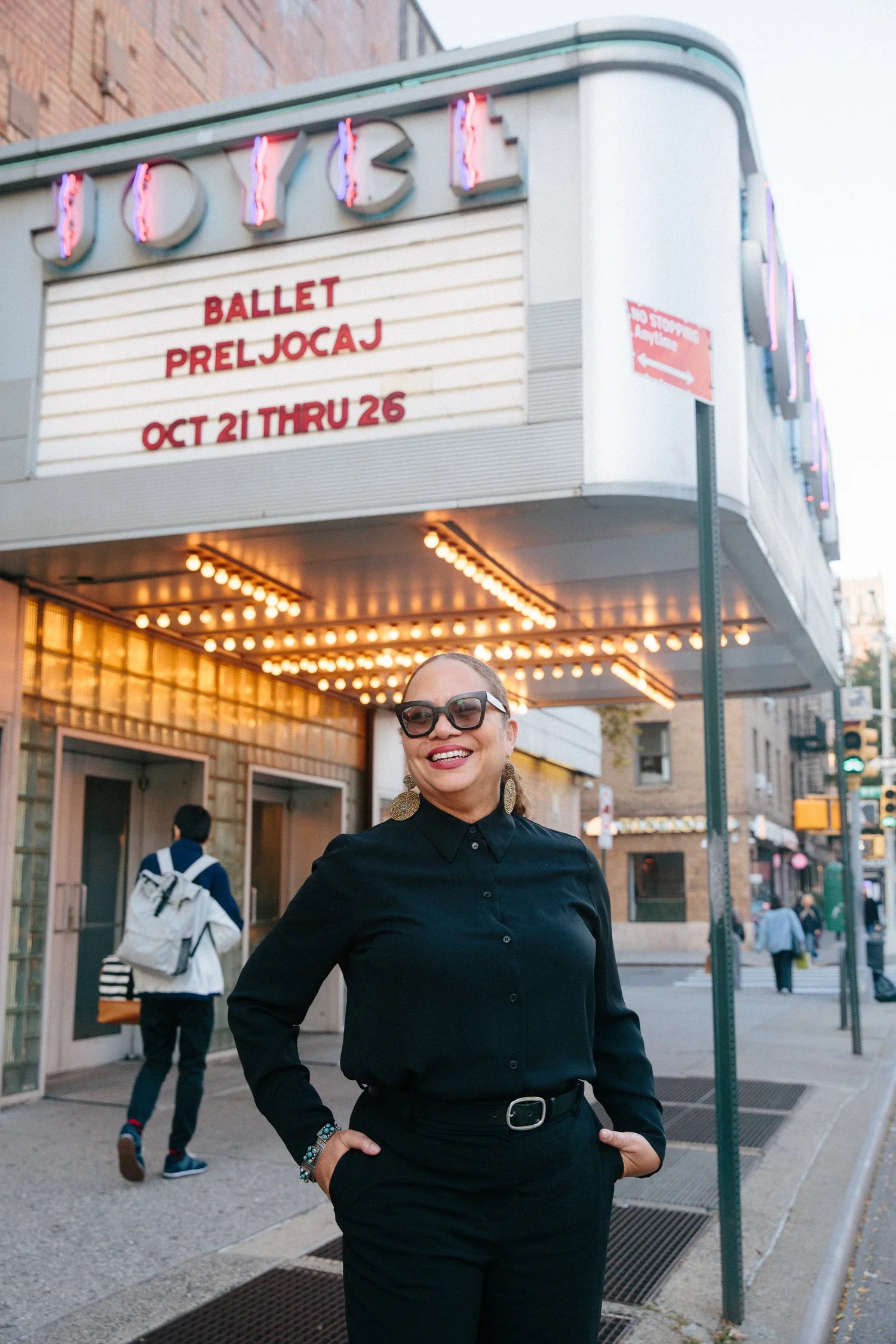
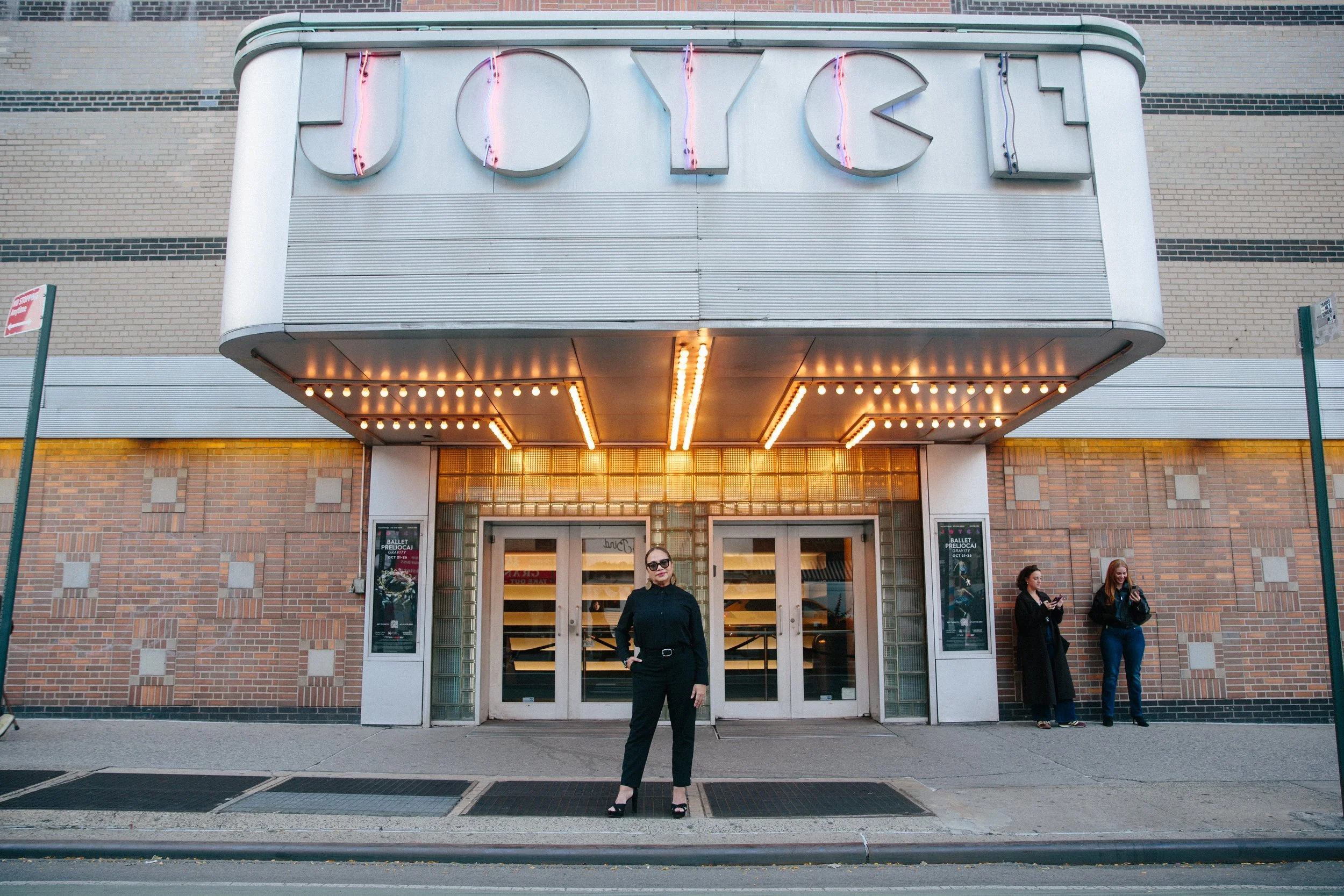
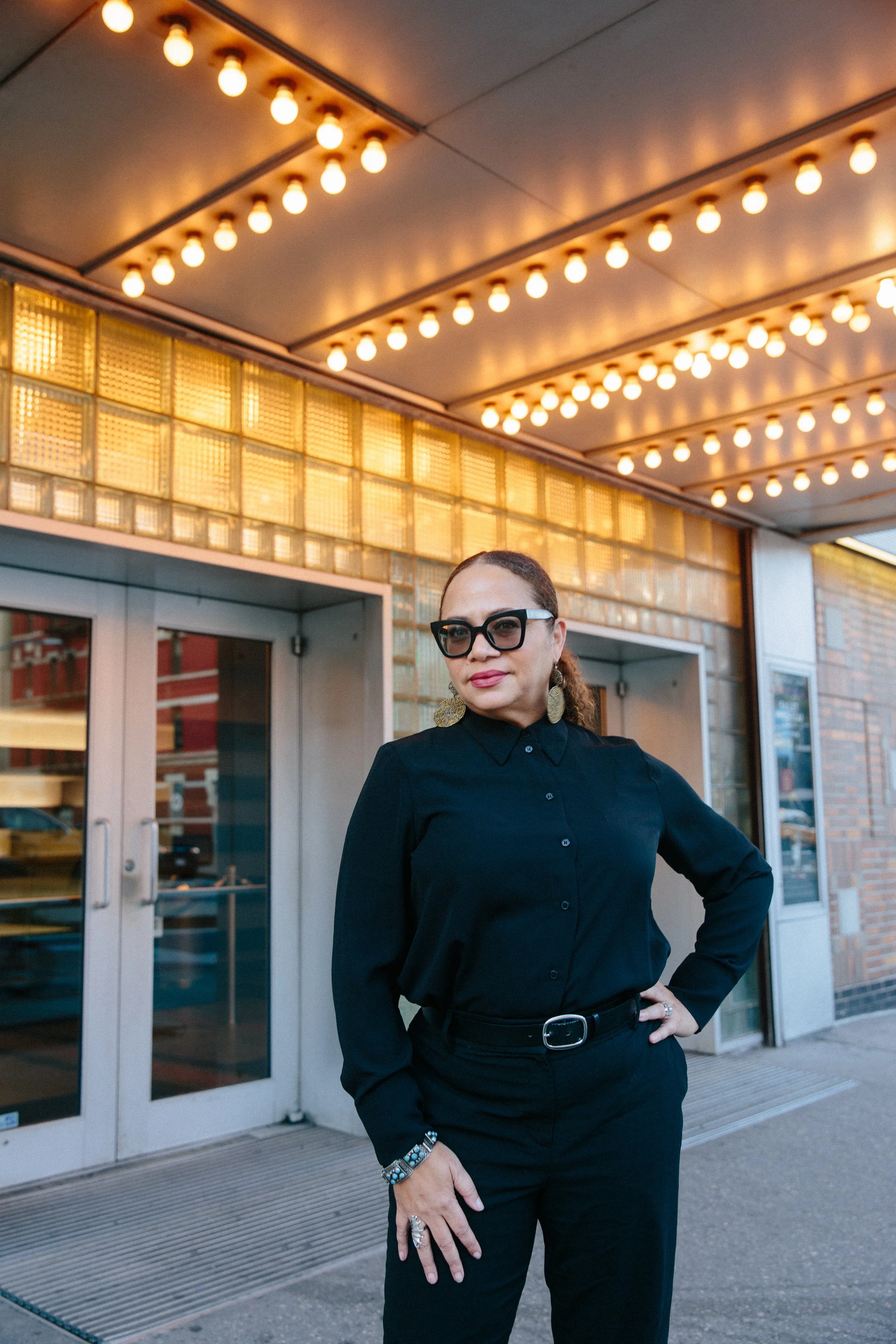
Born and raised in Southwest Philadelphia, Danni Gee’s career in dance started with community and carried her through to acclaimed dance companies like PHILADANCO! The Philadelphia Dance Company and Alvin Ailey American Dance Theater. Now she is making history as the Director of Programming for The Joyce Theater, bringing decades of lived experience as a dancer, curator, and cultural steward to one of the leading dance theaters in New York City and the United States.
As a teenager, Gee watched dancers who looked like her take the stage and imagined what might be possible. Years later, she stood on The Joyce stage herself. Now, she helps decide who gets to stand there next. In an announcement for the appointment, The New York Times described the position as a powerful one, noting The Joyce’s pivotal role in presenting touring work and experimental performances.
In a conversation last fall with Danni Gee at The Joyce, she reflected on the institutions that shaped her, the confidence and challenges dance gave her, and the responsibility she carries as a programmer to ensure that artists and audiences alike feel seen, welcomed, and inspired.
“Anybody can dance. And when we remember that, dance becomes what it’s meant to be: connection, expression, and joy.”
You were involved with Philadanco very young. How did that journey begin?
I’m born and raised in Philadelphia. When I was about 11, my mother decided she needed to send my sister and me somewhere different as sadly, the neighborhood where my sister’s middle school was located was not so welcoming to black and brown children. My grandmother saw an ad in the newspaper for a school on Broad Street, a private performing arts school that was connected at the time to the University of the Arts. We applied, our grades were strong, and we were accepted.
That’s really where my formal dance journey started. One of the older students at the school was already dancing with Philadanco. She was two years older than me, and I thought she was the most gorgeous person ever. I had a little crush on her. One summer she told me I should audition for Philadanco’s training program. I went, auditioned, met Joan Myers Brown that same day, and was accepted. I was about 14.
That summer, I trained with legends like Milton Myers, Pearl Primus and Jimmy Truitte. It was also the first time I was in a room full of people who looked like me. Black and brown dancers who were beautiful and incredibly talented. Watching the main company rehearse, seeing that future so clearly, changed everything.
By the fall, Ms. Brown invited me to take company class. The next summer, when I was almost 16 and still in high school, she invited me to join the main company. That was the beginning of my professional career.
Before formal training, what was dance to you as a kid?
Dance was mostly television. Movie musicals—Gene Kelly, Shirley Temple. I was also very athletic, a total tomboy, always running and jumping. But when I was about seven, I went with my Mom and sister to New York with a church group to see the original Broadway production of The Wiz, choreographed by George Faison, starring Stephanie Mills.
Seeing that show changed me. There were people who looked like me dancing on a Broadway stage in this huge city. When we came home, my sister and I started making up routines, performing at family gatherings. We were already singing in the church choir, so the desire to perform was there. It just found a new outlet.
“Theaters have a responsibility to reflect the communities they’re in or to intentionally expand what audiences see.”
Dance became a space for confidence, but also pressure. How did that shape you as a person and a dancer?
Dance gave me confidence because it was something I could control. I could work at it and see improvement. But it also made me very self-conscious about my body. Physically, my body had developed early, and now I was in a predominantly white school where many girls had been studying ballet since they were five and were all slim and petite. That comparison led to unhealthy eating habits and a lot of scrutiny of my body.
That’s something dancers—especially dancers who don’t fit a narrow idea of what a dancer “should” look like—have to fight. But being onstage, especially after my first solo in sixth grade, hooked me. I knew I wanted to pursue this seriously.
You’ve danced with Philadanco and Alvin Ailey. Both companies with strong legacies of representation. How do you see the industry now?
Those legacies matter. When you’ve had role models like Joan Myers Brown, Alvin Ailey, and Judith Jamison, you feel a responsibility to lift others up. In my work as a curator, representation is central. Theaters have a responsibility to reflect the communities they’re in or to intentionally expand what audiences see.
There’s still a lot of work to do, especially in large ballet companies. There are too few dancers of color in principal roles. Some companies still have none. That tells us something.
Why does representation in dance matter so much?
Dance is an incredible art form. It moves you in ways other forms can’t. People also need to see themselves onstage. When audiences see someone who looks like them, regardless of genre, it invites them in.
I remember us showing up in force to the Metropolitan Opera House to support Desmond Richardson when he joined American Ballet Theatre in 1997 as a Principal Dancer and performed the lead in “Othello”. We were there for him. That kind of visibility changes who feels welcome.
You’re now shaping seasons at The Joyce. What excites you most about that role?
I’m a performer first. I love watching artists do what they do so well and knowing I had a hand in bringing them there. Some companies I present are artists I’ve known for decades like Rennie Harris, who I’ve known since I was 14, or Complexions Contemporary Ballet, whose artistic directors, Desmond Richardson and Dwight Rhoden, I danced with at Ailey.
But I also love seeing companies perform at The Joyce for the first time and watching the dancers’ faces when they realize where they are. This theater holds a lot of meaning.
You’ve spoken openly about mental health in dance. What do you wish young dancers knew?
I wish I had understood that dance couldn’t and shouldn’t be my entire identity. When I had to leave Alvin Ailey in 1997 due to injury, I went through a deep depression. I didn’t have other skills to fall back on, and therapy wasn’t something we talked openly about in my family.
I encourage dancers to have outside interests and support systems. Loving dance shouldn’t mean sacrificing your mental health. There are resources like sliding-scale therapy, organizations that support dancers financially and emotionally. You don’t have to go through it alone.
Finally, how can people engage with dance if they’re not professionals?
Dance is for everyone. There are open classes at all ages, levels, free programs, outdoor performances. You don’t need perfect feet or a certain body type. Dance is ancient. It's one of the first forms of language.
Anybody can dance. And when we remember that, dance becomes what it’s meant to be: connection, expression, and joy.